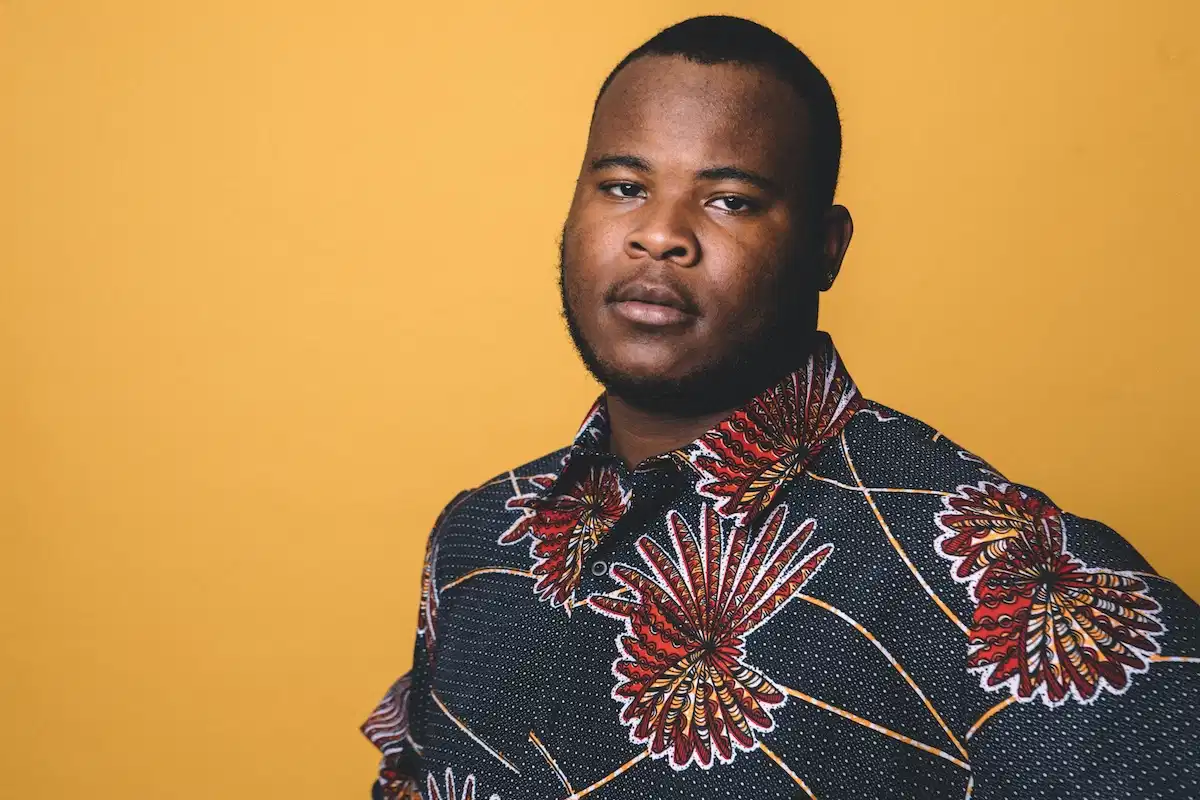
Aaron Shaw: an honest experience turned into music
Absence reveals the importance of what was once perceived as an intrinsic right of existence. What once seemed inexhaustible slowly begins to diminish, and you come to realize that nothing remains static — that everything exists in constant motion. Without warning, life changes, and with it, the perspective of the person you once were and of the one you are becoming. Fortunately, the void left by absence can be filled by aspirations that ignite the soul. It is there that pain transforms into creation. In this sense, the reduction of oxygen became an album: And So It Is, in which the air expelled through the flute and saxophone fills and warms every corner of the atmosphere.
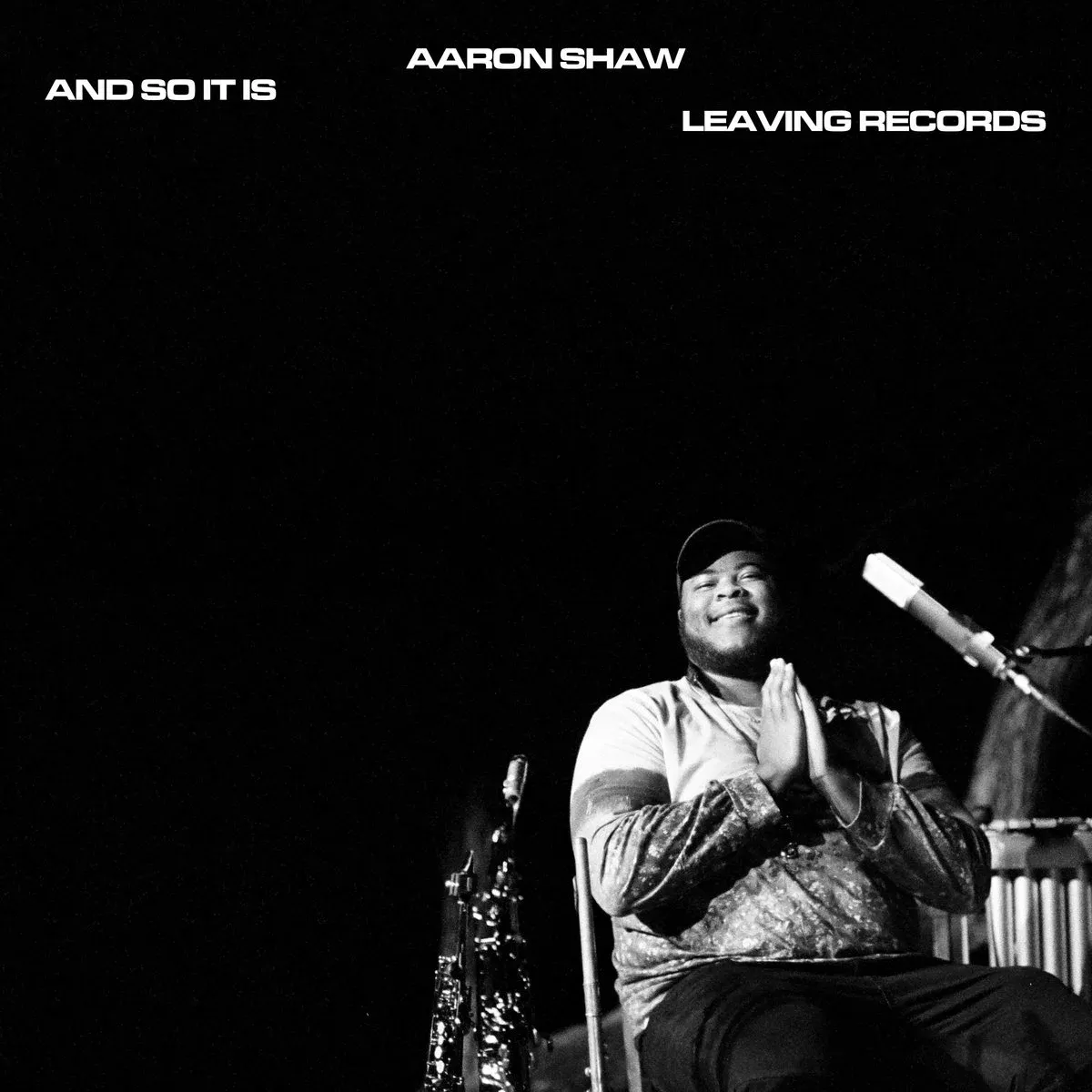
Some situations cannot be summarized by the simple meaning of a word: illness, loss. When language is not enough, it is time to listen to the music of the soul. "While I was creating these songs, I wasn't thinking about being labeled a jazz artist or anything like that. It was just me going through a difficult time and trying to escape." Both the music and the words belong to Aaron Shaw — a young man who, in recent years, has been forced to create his own form of communication with doctors and his instruments. On one side, the cold, clinical vocabulary; on the other, the saxophone and the flute — confidants that do not ask how you are feeling, yet somehow always know.
In 2023, Shaw was diagnosed with bone marrow failure: his body wasn't producing enough oxygen. "I had to change my entire mouthpiece setup. I had to change the way I played because I was short of breath. I couldn't hold the back pressure. I had been developing this sound for 15 years, and suddenly I had to figure out a new way of playing…” When life shakes you up like this — when death ceases to be a concept that only applies to old age — your entire outlook changes, even the relationship you have with the very thing that has kept you alive.
“I didn't initially set out to make an album just because I got sick. I approached music the way I always have — as the only way I know how to escape. But it was difficult. For a moment, I hated music. At my lowest, I felt like my life had amounted to nothing. The solitude was forced upon me, so I was trying to find my way out of that darkness. To feel some happiness, I knew I had to pursue things I had long envisioned — things I had either slept on or hadn’t gotten to yet. I was spending hours trying to figure things out, just trying to get my mind somewhere else. So yes, I really hated music for a while. But slowly, I tried to find my way back.”
For the good of music and his community, Aaron is doing better these days. “It's chronic at this point, but everything's at a good pace. I'm just keeping up with my health, eating right — that's been its own journey. Losing weight, learning more about meal prepping, and staying on top of all that, because I want to be here for a long time.”
Three years in the front seat of a roller coaster can bring a great deal of tension; nevertheless, after the release of the album, the Los Angeles multi-instrumentalist is clear about one thing: “I don't want people to look at me as an artist on a pedestal. I want them to look at me more as a mirror, because if I've gone through what I've gone through, there's a possibility that I can transfer some of that energy to the next person.” The eight pieces that make up the album arise from the most intimate emotions a person can experience. Suspended in the air, they remain there — waiting to be heard and felt. “There's hope in this album, because there were better days while I was creating — moments of light.”
The fact that I can do this for a living is incredible. I'm truly honored. But it's like anything else — it takes dedication and focus, because you always want to avoid repeating yourself. It's a living, breathing thing. Paying attention to the culture at large, to the social dimensions — because it's a social art form — that's what's important.
In the valley of uncertainty, Shaw was never alone. Mentors, family, friends, musicians: community. “My community is growing now, and I'm so honored and grateful because it showed up in the moments when I was most vulnerable, when I couldn't be myself anymore.”
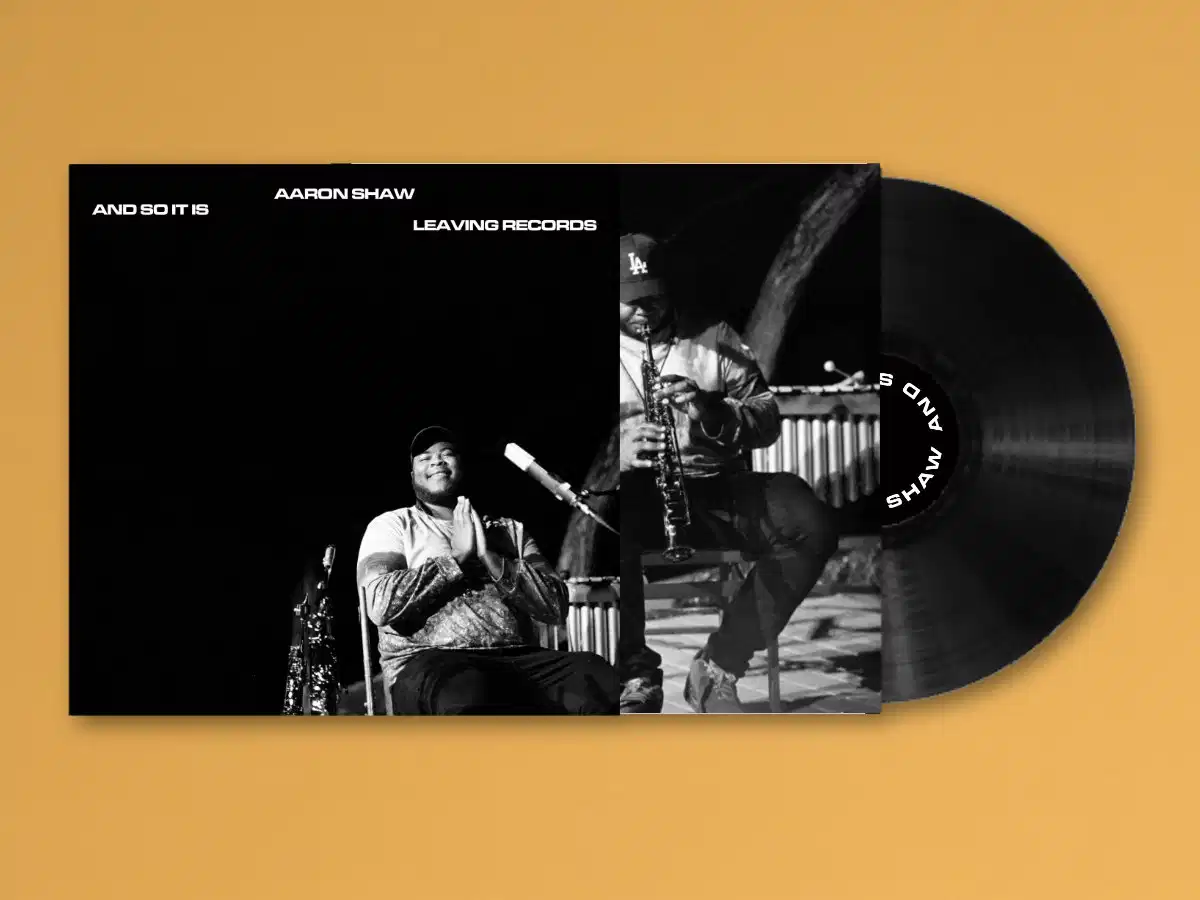
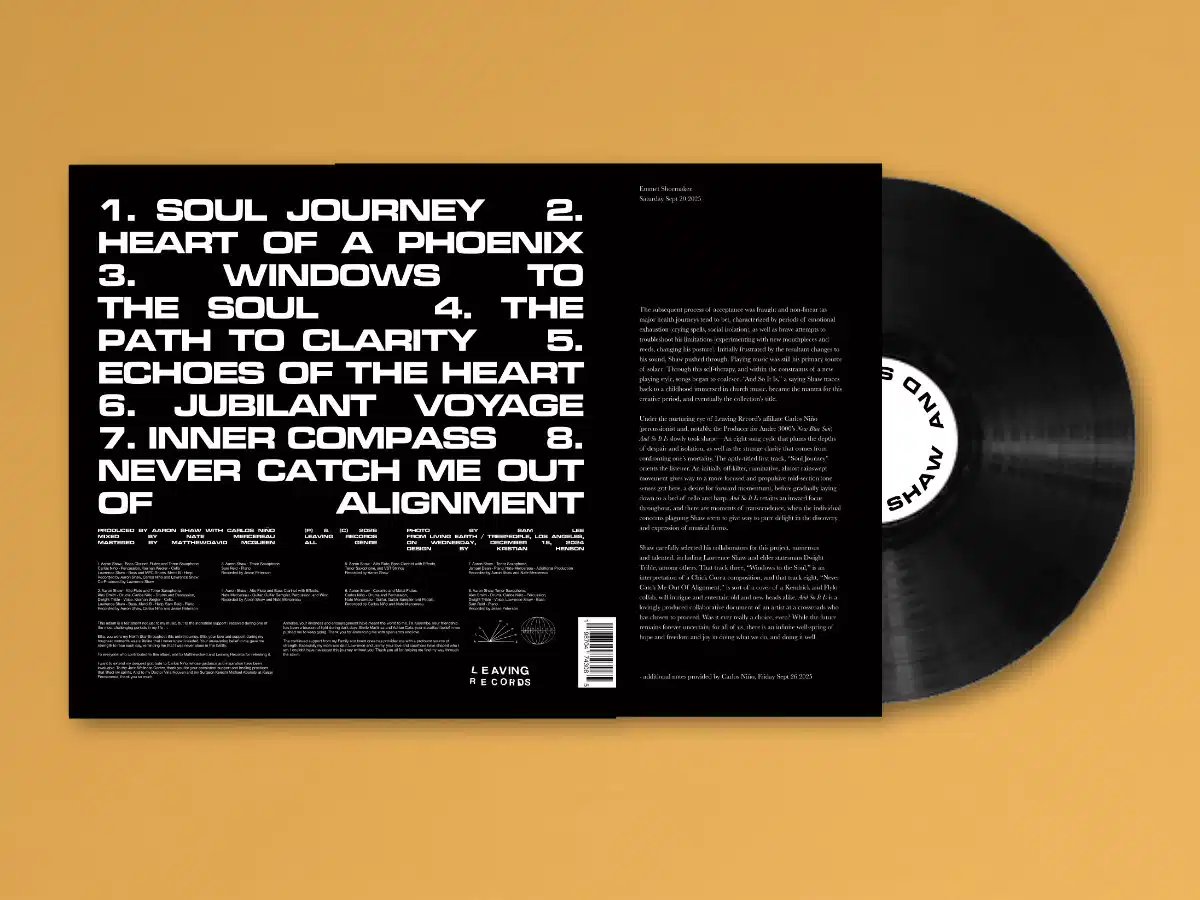
And So It Is vinyl
Alongside him on the album is a carefully chosen circle: his brother Lawrence Shaw on bass, Alex Smith and Carlos Niño on drums and percussion, Sam Reid on piano, Kiernan Weggler on cello, Merci B on harp, and Ghalani on vocoder. And then there is Dwight Trible — whose voice appears on two tracks and whose presence means something beyond the music. “Dwight's been a huge pillar in my community. He was a no-brainer to add. I needed that soul. He represents a huge part of where I come from musically, so having him on the album was an amazing representation of what I was going after.”
Musically, his creative process never remains the same. The way he approaches melodies and abstract sounds depends on whether he sits at the piano or drums, or if he begins with the saxophone or flute. But one thing remains constant: he always follows his soul. “Feelings are a big thing in music. A lot of the time, there'll be a combination of sounds I hear — or even just one sound — that can unfold an entire movie in my mind, like the perfect soundtrack to something playing out visually.”
For Shaw, the act of creating is deeply interconnected with the ethereal nature of his surroundings. “Sometimes I'll use color: I'll look at something visually and from there dissect how I want to spell it out melodically — what chord choices feel in alignment. Because it's all frequency — colors are frequency, music is frequency — so in some way, shape, or form, they relate. I feel like it's my duty as a composer to explore those connections and enjoy the journey of that process, while still challenging myself and honoring the gift of this craft.”
What began as a confrontation with absence ultimately became a testament to presence: to resilience, and to the quiet strength that refuses to let silence win. And So It Is, by Aaron Shaw, stands as a reminder of life's uncertainty — but above all, it is the sound of a musician learning to breathe again, through the saxophone, the flute, and the quiet conviction that music, like life itself, is always in motion.