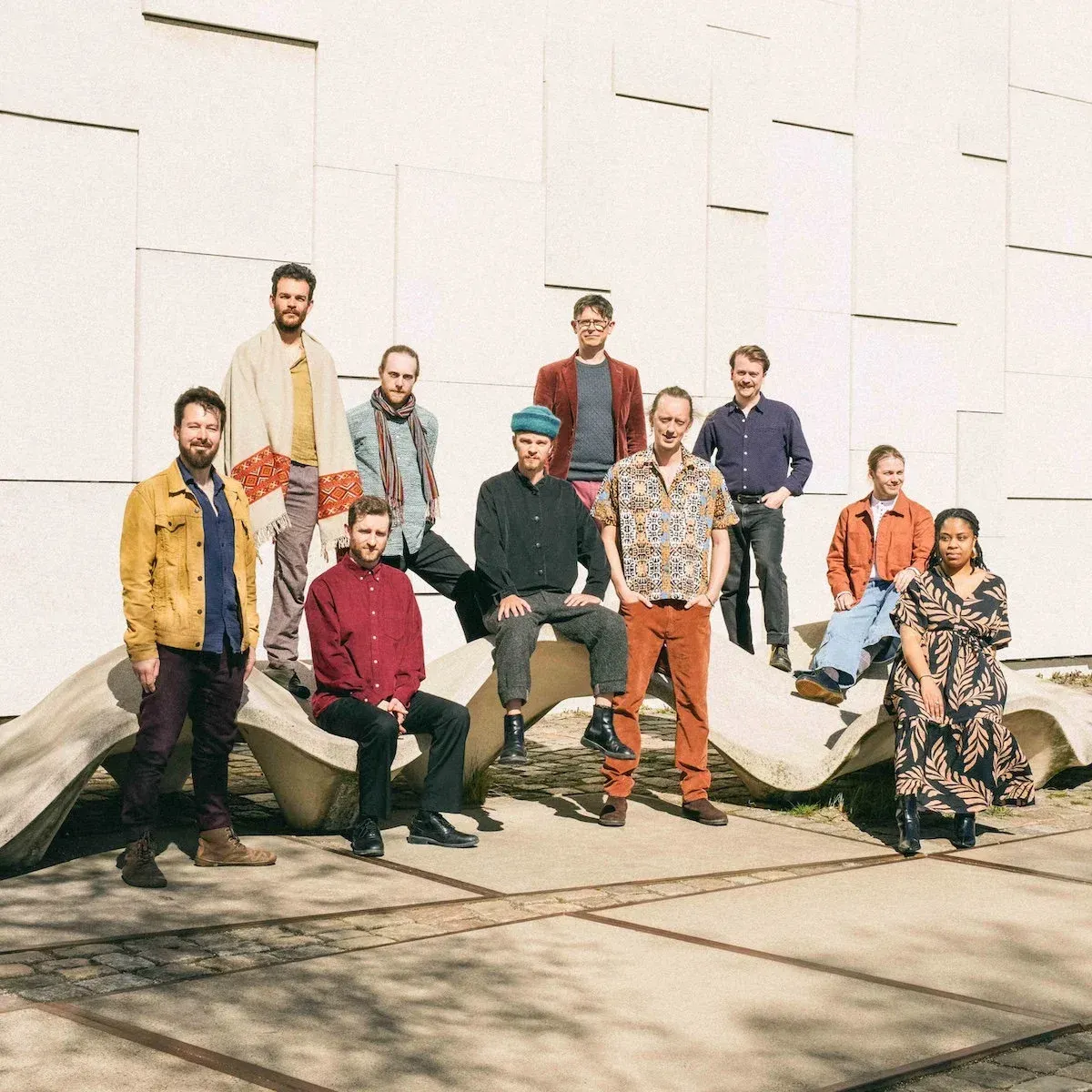
Ancient Infinity Orchestra: The Freedom to Be Together
I get close to myself the moment I decide to walk towards you. We spend so much of our lives trying to understand who we are as individuals, only to discover that your steps and mine create a beautiful syncopated sound in the grass. Freedom is often imagined as the absence of others; yet, perhaps, it is having the power to listen to our own step without forgetting the countless footprints that make this melody possible.
There is a moment when individuality stops meaning isolation. It can happen in conversation, in friendship, or simply in the instinct to listen before being heard. Music makes that moment tangible: different lives arriving with their own histories, references, and ways of understanding sound, suddenly sharing the same space without surrendering what makes each of them distinct.
For Ancient Infinity Orchestra, that encounter often begins with a proposition. “I suppose I bring some written ideas in, and I’ve maybe got my own perspectives of how it should sound,” explains bandleader and double bassist Ozzy Moysey. “But then, naturally, we’ve all got our opinions on things that could work differently, or what we could do with the music.”
What happens next with each composition is less about following a predetermined route than about letting one emerge. “We play it over and over again, and things fall into place,” says pianist Hugh Vincent. “You bring your own voice to it. Ozzy’s compositions are very good for this kind of thing, for bringing your own practice and creativity to the piece.” He reduces the idea to its essence: “That’s the goal of all music, all improvised music.”
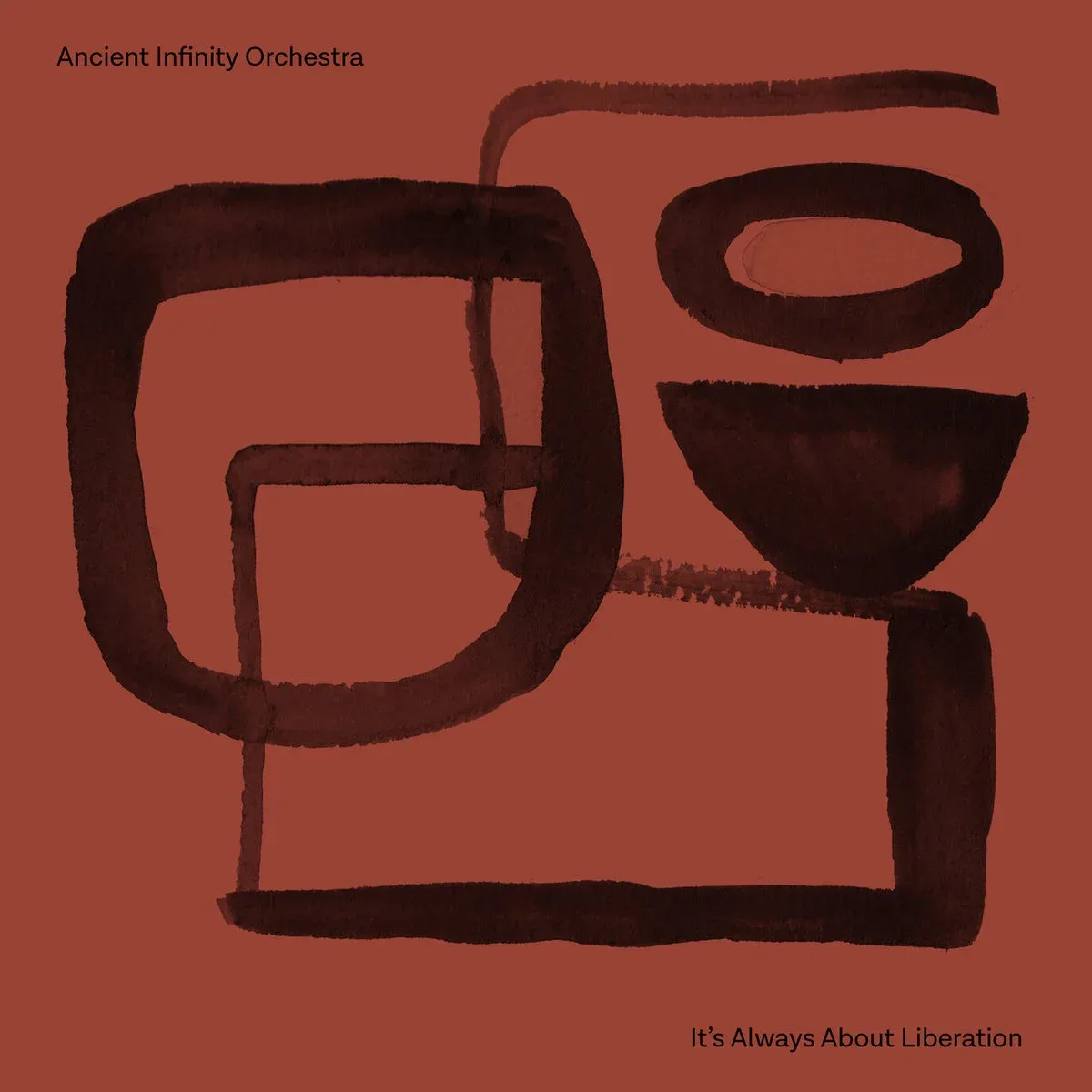
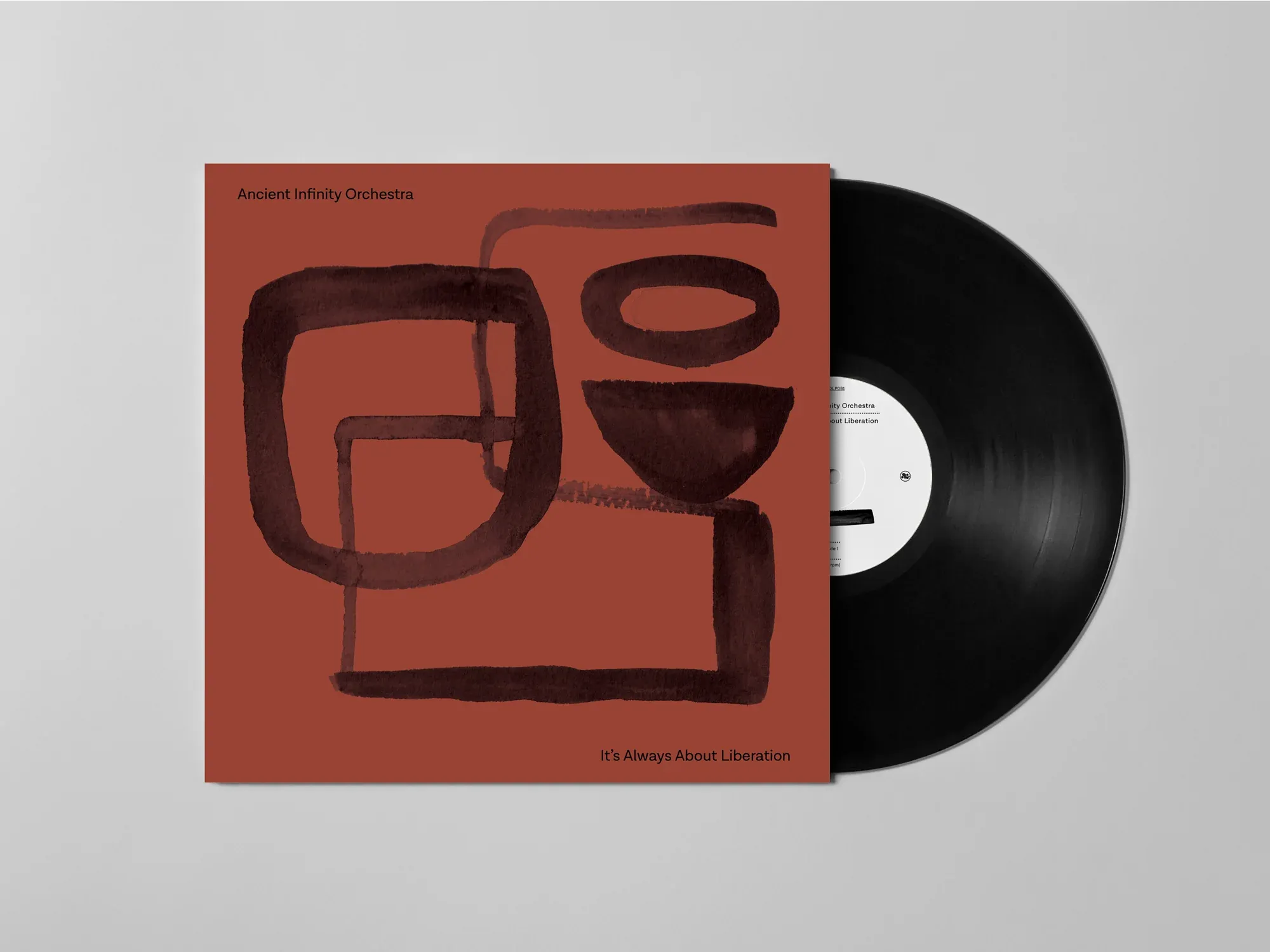
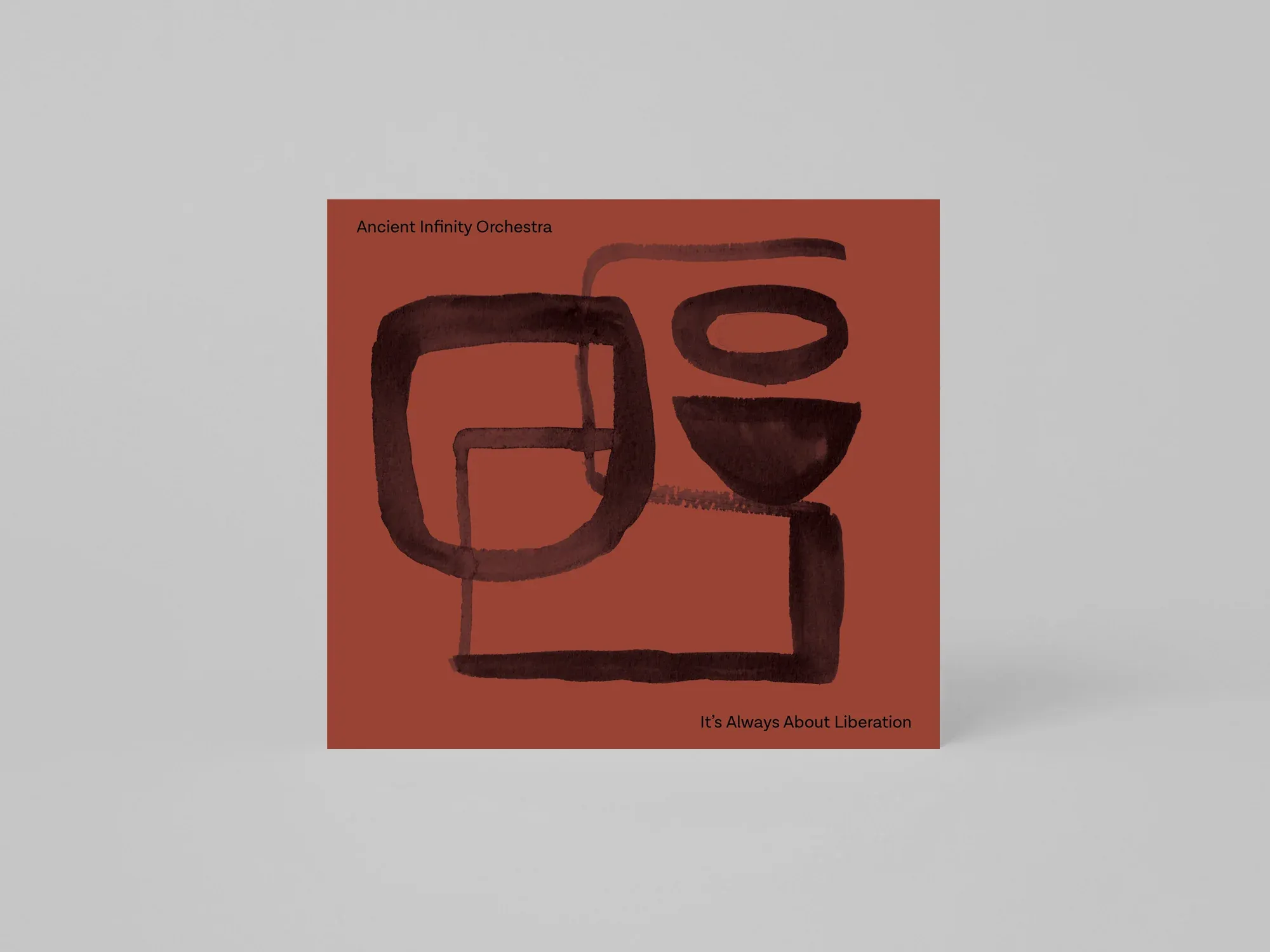
That collaborative instinct has found its widest audience yet since the band signed with Gondwana Records. “Before we got signed, it was hard to get even a few people down to one of our gigs in Leeds,” Moysey recalls. “Even within Leeds, people like the sense of verification that the band has been approved by somebody outside. So then, all of a sudden, we started selling out our shows.” It is the backdrop against which the group now releases its new album, It’s Always About Liberation.
An album that, like the orchestra itself, refuses to remain fixed. From composition to recording and eventually the stage, its songs continue evolving. “It can go to more crazy places,” Vincent admits. Bass clarinetist and percussionist Joel Stedman describes the recordings as “very focused versions of each song,” but says the band has recently begun exploring what happens when it loosens those boundaries. “There are a lot of really strong improvisers in the band—a lot of people who are really happy to do long solos and take the songs into different places.”
“We’ve been playing around a bit more with having a lot more openness when we do live gigs,” Stedman continues. “That’s something we’ve been experimenting with: stretching out some of the tunes live.” Sometimes that means allowing a composition to temporarily revolve around a single musician: “Maybe one song becomes a kind of special moment for one member of the ensemble.”
For Moysey, playing together also involves something that exists beyond the notes themselves. “You’re hoping to, I think, just bring a better connection with each other and with everyone in the room,” he says. “You’re congregating in a sacred human tradition of coming together and doing something together.”
His conclusion is simple: “Connection is the goal. Love and liberation.”
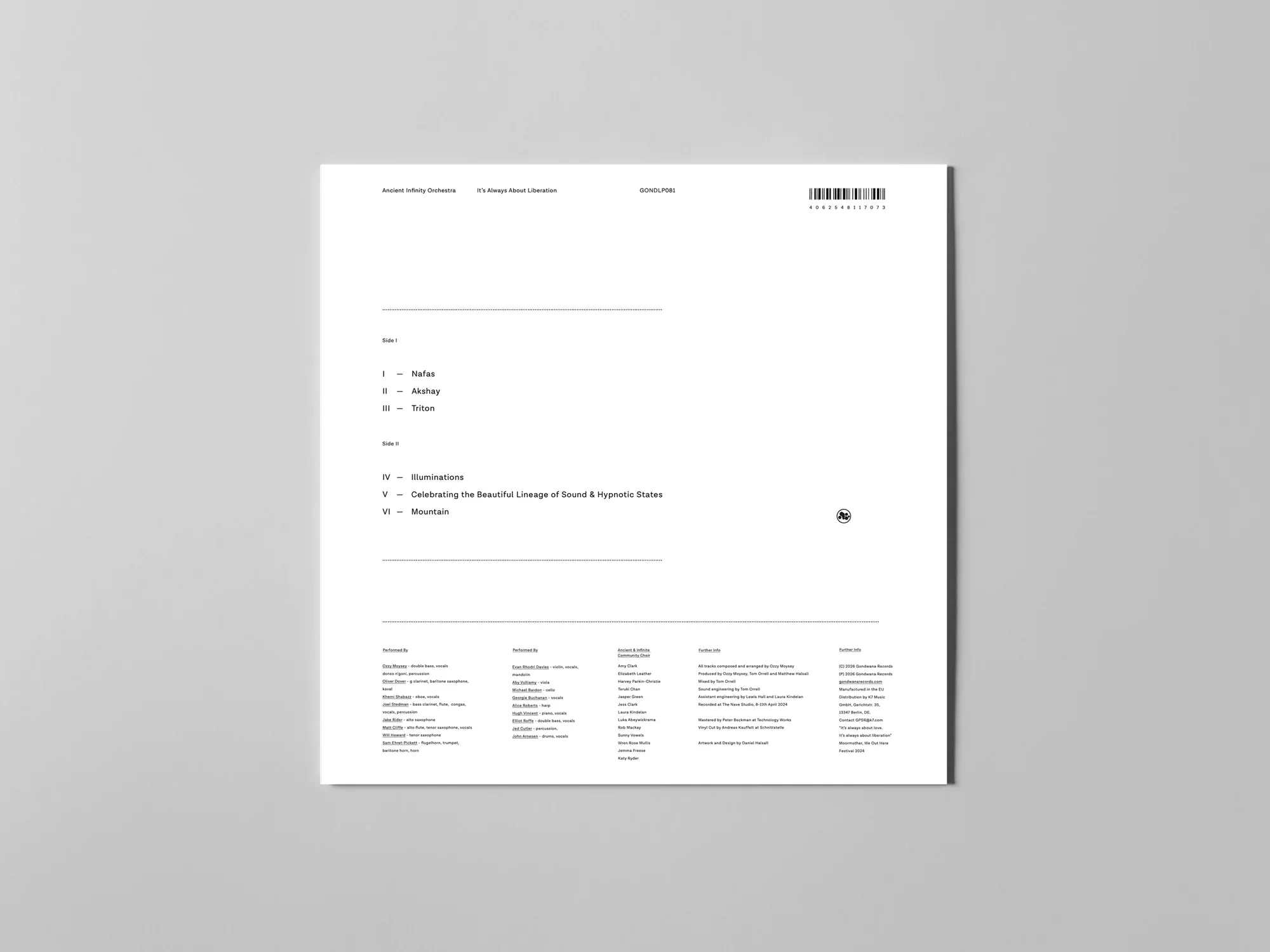
That tradition extends far beyond the people currently occupying the room. For them, the orchestra’s sound carries traces of Alice Coltrane, Pharoah Sanders, and Sun Ra, alongside musical traditions from other parts of the world. On “Celebrating the Beautiful Lineage of Sound & Hypnotic States,” a track from the new album, a Gnawa rhythm from West Africa becomes part of that sonic palette. “We bring into the music all the influences that live within us.”
For Stedman, jazz is a heritage tied to a much more personal sense of belonging. “It’s the music that I love the most. It’s where I feel at home. It brings the best out of me, and it’s where I belong in music.” But his understanding of that relationship changed when he began looking beyond what he had learned at music school. “There’s a separation between the music and, socially, where it came from. There’s not much acknowledgement of actually where it belongs. It’s always theoretical.” Learning about Black American music meant confronting that distance. “When you start to learn about Black American music, and you start to figure out where it comes from, because it’s not our tradition, at the same time there’s something good about being amazed by it.” Learning that there is also a European tradition helped him understand “how you fit into a bigger picture.”
That bigger picture extends into improvisation itself. “Jazz and improvisation are a sensibility and a way of life, a way of approaching music and all kinds of art as well,” Vincent says. Stedman arrives at a similar idea through human relationships: “The more you learn about the world and how people relate to each other, the more improvisation makes sense in practice.” For him, the possibilities of improvisation become clear when musicians who may share neither history nor culture meet on stage. “I think it’s amazing that musicians from different cultures can play together. I love meeting people for the first time when we’re playing in jam sessions. It’s a common language.”
A common language does not exist apart from the world in which it is spoken. “It’s almost impossible to separate creating art from the world, isn’t it?” Vincent reflects. “You can’t separate it from world events and the horrible things that happen around the globe. So it’s going to influence how you play and how you compose.”
For Moysey, that relationship is not abstract. He recalls being at home as protests unfolded in Iran, trying to understand what was happening largely through Instagram. “There was no one televising it,” he says. At the time, an Iranian woman was living in the same house while her family remained in Iran. “People were just massacred in the streets whilst going out.” Out of that experience came “Iran,” a tune the band now plays live, dedicated, in Moysey’s words, “to the bravery of those people standing up against the regime in their millions on the streets.”
It is in that tension—between witnessing oppression and being unable to stop it—that Moysey locates creativity’s quiet defiance. Recalling an idea he encountered about joy as an opposition to oppression, he arrives at something elemental: “I think to be in a creative state is a joyous thing. And so I think just the activity of being able to create, whatever that may be, is fighting against that.” His invitation is equally direct: “Let creativity have the last word against all these horrendous things all the time.”
Liberation, then, takes on a more concrete meaning. For Moysey, it begins with “getting to do what you want to do with your precious time existing.” Jazz inevitably enters his understanding of that freedom. “It’s a Black American creation, but they transformed something that was very personally oppressive into a gift to the whole of humanity forever.” That music has transcended the circumstances in which it emerged, shaping Moysey’s own life in the process: “Whatever they have created has liberated me, even when I’m in a different situation on the other side of the ocean.”
For Moysey, it eventually comes down to something simple: “Liberation is expressing your creativity without being judged or having fear.”
Even in turbulent times, some choose to surrender themselves to art. For Ancient Infinity Orchestra, that means first recognising the other: dozens of instruments sharing the same space, without one needing to silence another to be heard. Through improvisation, they find joy in that coexistence, allowing each voice to remain distinct while becoming part of something larger. And perhaps that is why, for them, it’s always about liberation: creating imaginary worlds where difference is not something to overcome, but the very reason those worlds can exist. Universes that belong to no one entirely, and that disappear the moment the music stops.