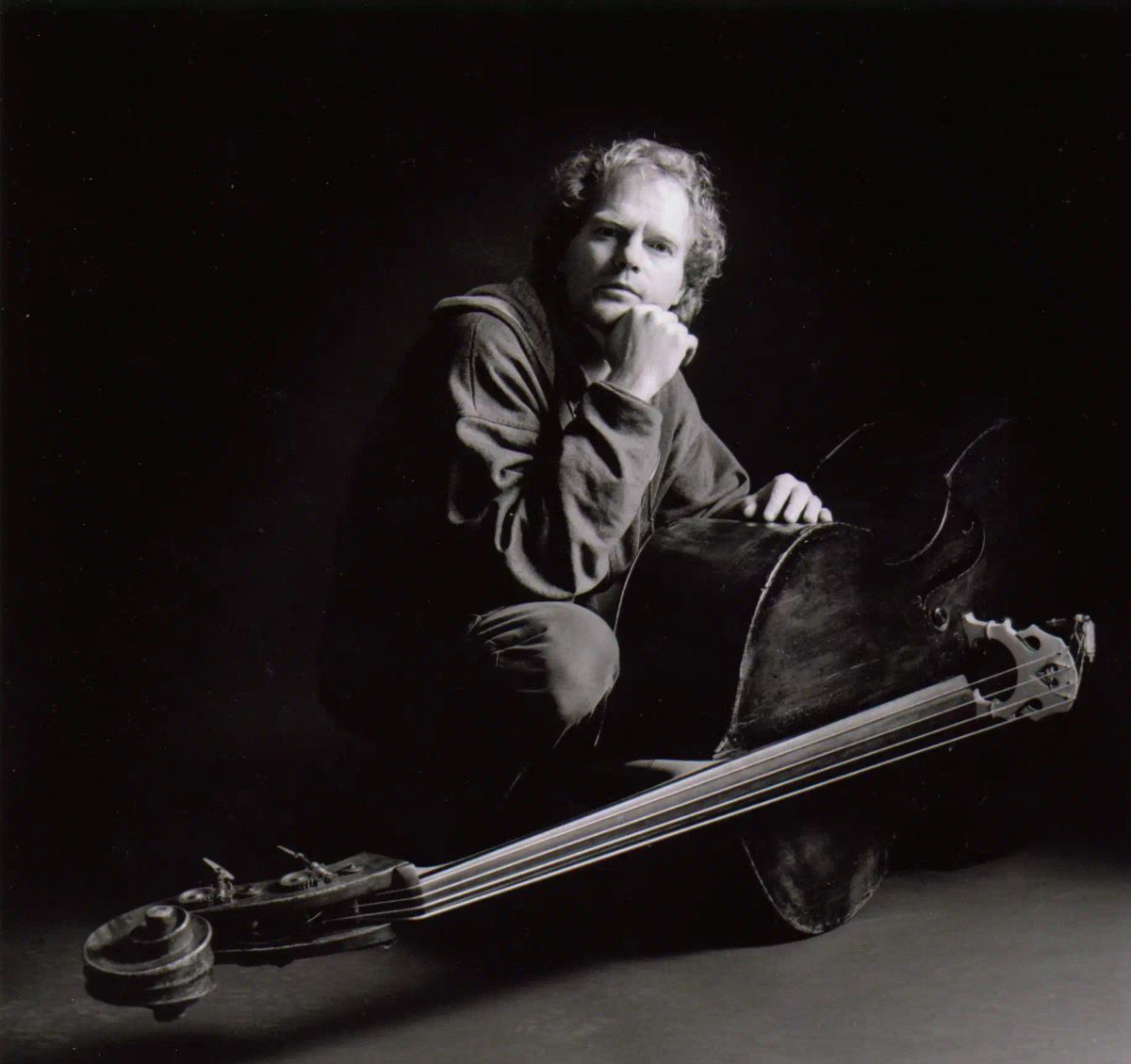
Anders Jormin: the poetry that surrounds his compositions
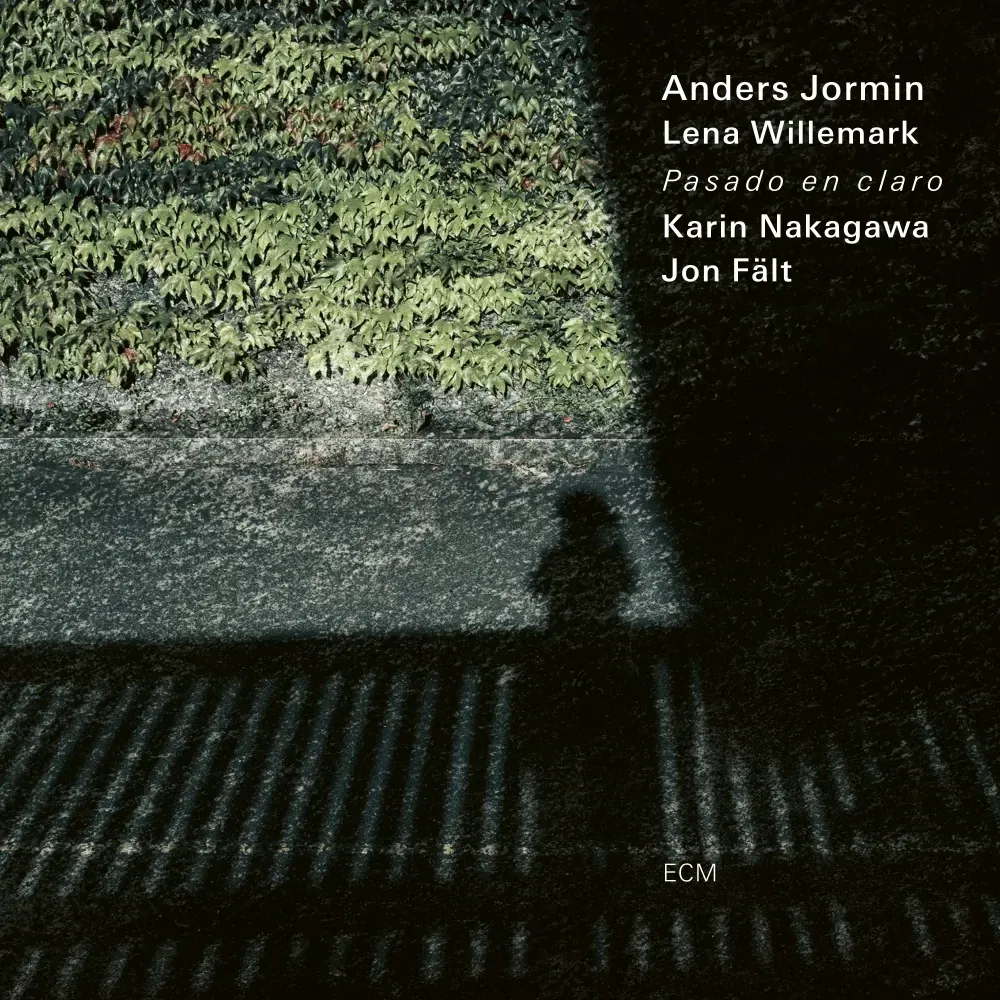
Looking into the past goes beyond understanding our present. To defy the laws of time is to live a double life: the first, of the lost paradise that defines us, and the second, of the possible futures that force us to reinvent ourselves. The music of Pasado en claro moves within this duality. Poems from other times and latitudes live in its songs, while the musical compositions challenge contemporary jazz and wait to transform themselves in each improvisation.
"When I play the double bass and have the chance to create music as a composer, it feels like I reach a certain inner balance and harmony. The bass has become my working tool, the closest instrument I have to express myself in music.” These are the words of Anders Jormin, the first contemporary improviser to become a member of the Royal Swedish Academy of Music, and the main composer behind Pasado en claro."The music is idiomatically composed and made for these four people, so no one can replace these musicians without affecting the music."
ECM represents a definite quality mark that proves jazz is an art form
In this album, we explore the fields of jazz and folk music. Alongside Anders’s double bass, we find the compositions and voice of singer Lena Willemark. “It is easy to discover influences in my music from folk, jazz, and even classical music. Many people say this, and I can say, yes, they are probably right—but it is not a conscious choice. It is simply the result of all my musical experiences.”
Anders Jormin, Lena Willemark, Karin Nakagawa, Jon Fält - 'Blue Lamp' | ECM Records
When we think of jazz, we usually imagine a piano or keyboards, but in Pasado en claro, Karin Nakagawa plays the 25-string koto. “The koto has its own sound and atmosphere. It also has limitations: you cannot play jazz chords on it. Through these limitations, I force myself to think differently and to compose something that is possible to play,” Anders says. The mysticism of the koto, together with the precision of Jon Fält on drums and percussion, creates an environment that expands and grows brighter as the music unfolds. All songs are in Swedish because you have to start the creative process where you are yourself
The multicultural nature of the album goes beyond the backgrounds of the musicians. It is also present in the selection of texts that served as the engine of the recording. “This is an album built around poems. The poems were the foundation for my composing. I’m not trying to illustrate the words, but I was inspired by what they say and transmit.” The poets range across cultures and eras: from ancient Chinese and Japanese traditions to Italian and contemporary Swedish poetry, as well as the Mexican poet Octavio Paz, who published the poem "Pasado en claro" in 1975.
“I don’t remember how I got hold of a Swedish translation of Pasado en claro, but that was the first thing I read by Octavio Paz. That work has stayed with me ever since. I’ve written music to other passages of Paz, though I may never have recorded it. How did I find him? It was more like an opportunity—almost an accident.” In literature, Jormin feels especially drawn to Spanish-language writers, from Latin America in particular. He mentions Miguel Ángel Asturias, Alfonsina Storni, and the singer-songwriter Silvio Rodríguez.
In the spectrum of art, everything is possible. For Octavio Paz, time is elastic, and the past comes alive whenever a reader encounters his words. Forty-eight years later, his poem continues to inspire. “I think the meaning of Pasado en claro is very poetic. It says something about how I wish my music to develop—toward clarity, toward light, toward understanding. There is also the moment when you finish an album and have to decide what to call it. I discussed it with Manfred Eicher, the ECM producer, and we agreed that Pasado en claro would be a suitable title."
It would be irresponsible to guess how Octavio Paz might have reacted to the impact of his words on Anders Jormin. Still, I allow myself to quote the first sentence of the speech Paz read in Sweden just days before receiving the Nobel Prize in Literature: "I begin with two words that all men have uttered since the dawn of humanity: thank you."