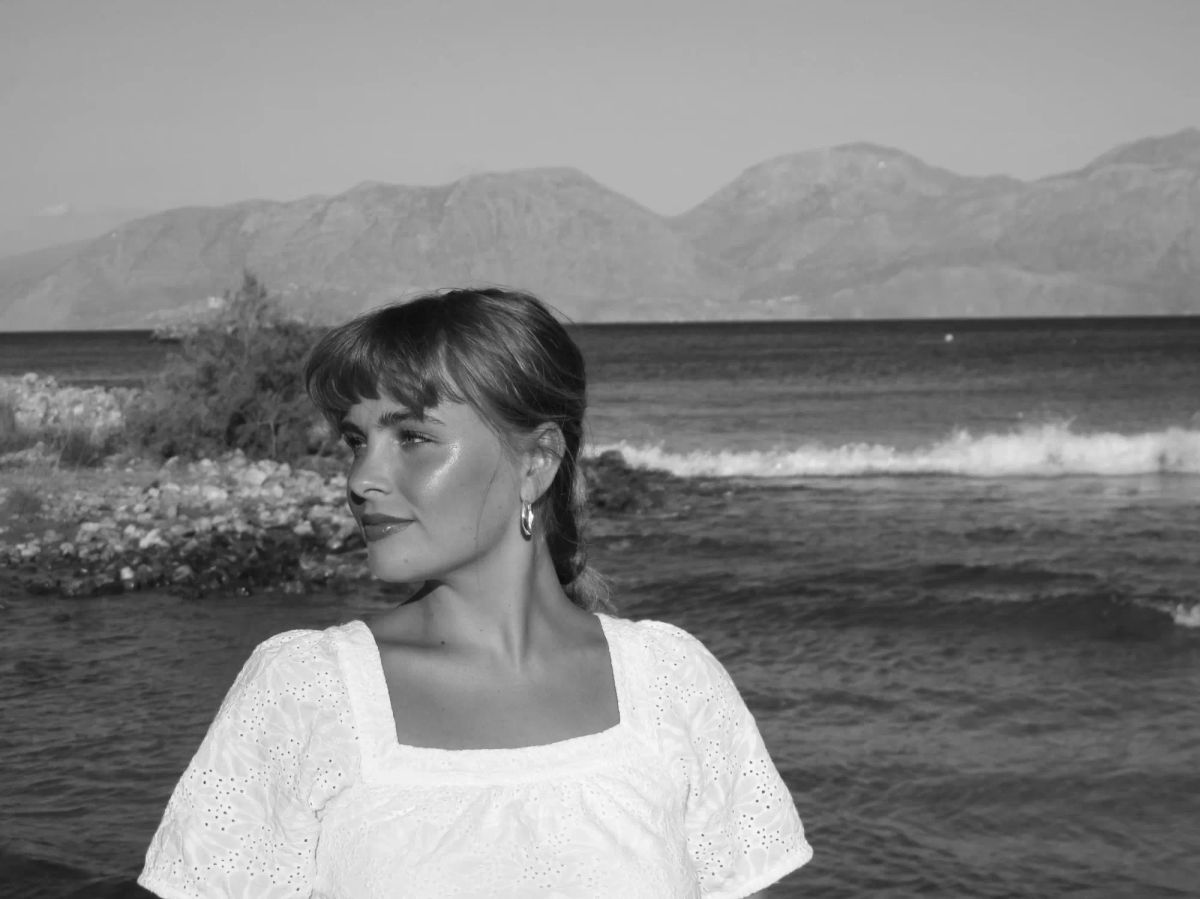
Erle Fonneland: The Quiet Radicalism of Simply Existing
While she sings, the numbers on the clock begin to fade away; the distance between the contemporary and the ancient softens, and the present becomes elastic. Here, creation is an act of radical acceptance—of imperfection, ambiguity, and vulnerability. As the music unfolds, new colors emerge, free from the urgency to become something else.
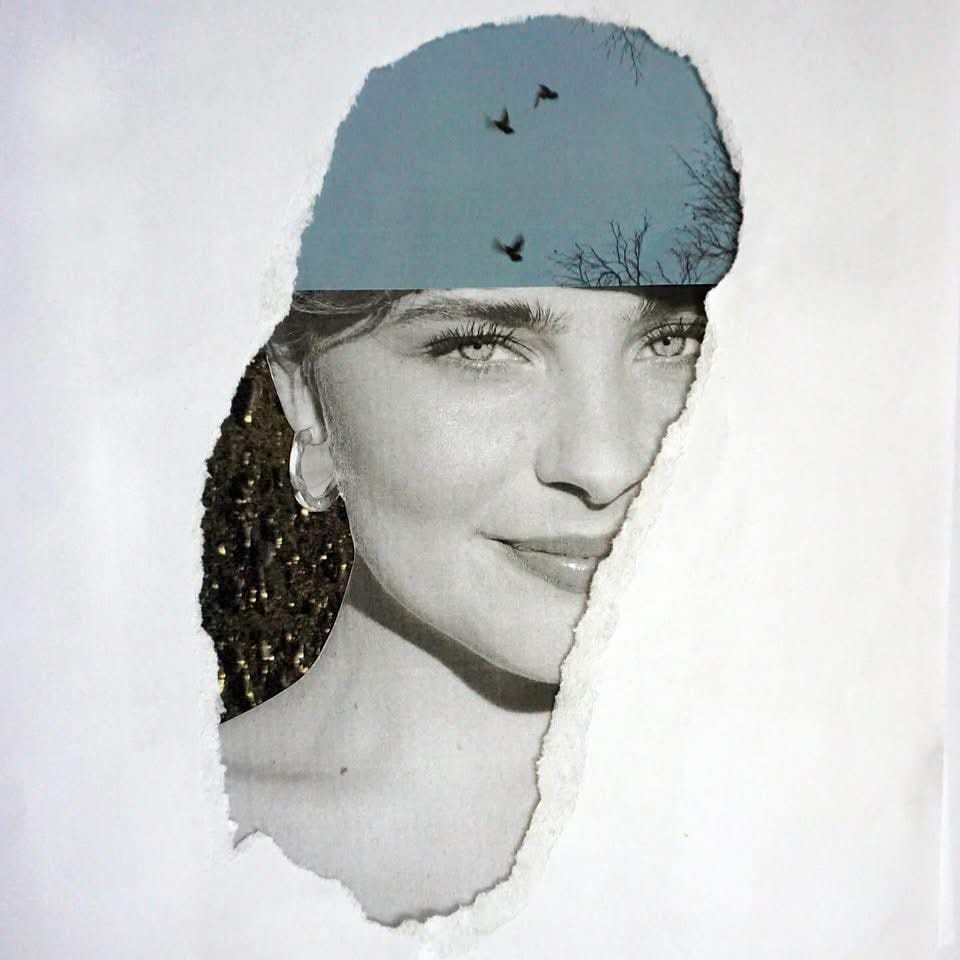
Music beyond performance: a force capable of dissolving the pressure of chronology, the expectation of progress, and the endless need to become. Perfection, then, appears as nothing more than an immaterial construct. “That’s what the album is about: do you have to evolve all the time? Is that the whole point? Or can you exist and represent the imperfect—just what you are?” The words belong to Erle Fonneland, who recently released Valør.
There is no desire for resolution in Valør, no obsession with refinement or technical completion. Instead, the album lingers in the beauty of what remains open, unstable, and human. “If you’re lacking something, that’s okay. With these compositions, I’m trying to present a perspective that’s a little unfinished, not polished. I’m just trying to create music that belongs to itself.” In a musical scene increasingly driven by precision and hyper-definition, Fonneland chooses to preserve the rough edges—the traces of process, emotion, and becoming.
At some point, existence itself became overshadowed by the expectation of productivity—the quiet tyranny of constant reinvention, of improving yourself endlessly, of becoming a sharper and more efficient version of who you were yesterday. Even art, perhaps the last refuge for uncertainty and contradiction, has not escaped that logic. Within jazz education and contemporary creative culture, evolution is often treated not as a possibility, but as an obligation.
Fonneland is fully aware of that tension. “My writing process is based on reflections. I don’t want to say that things are a certain way—I’m just trying to feel and use what I have, without trying to be someone else or better than I am. We can all get a little hung up on evolving and not accepting where we are: the necessity to sound different.” Her words do not reject growth; rather, they question the anxiety surrounding it. “Personally, I’m a full-time jazz student, so I’m always in that bubble, thinking about evolving all the time. But when I’m writing, I try to accept where I am and let my references appear—the music that has been part of my life and shaped my musical language. I let everything flow."
Valør: a Norwegian word that means shades—the contrasts that exist within the same color, where light and shadow coexist and depend on one another. For Fonneland, the title reflects a personal and creative process rooted in acceptance. “Without light, you could never see the shadows,” she says, describing vulnerability and strength not as opposites, but as emotions capable of existing simultaneously.
The album emerges from that emotional balance: the tension between past and future, amidst intrusive thoughts and the desire to remain present. “I’m always thinking, ‘after I’ve done that, I will be happy,’ or ‘I will feel some ease,’” she admits. But Valør is less interested in pursuit than in accepting things as they are—finding meaning in the present rather than constantly searching beyond it.
Language, too, becomes part of that emotional duality. There is no need to choose one identity over another, no desire to reduce expression into a single form. “I’m writing in English and in Norwegian. I didn’t want to choose just one, because English is a beautiful language and beautiful to sing in, and I feel that words have different meanings. Both languages represent me, but Norwegian feels more personal and vulnerable. I like the differences between them; I can express myself differently.” In Valør, language behaves the same way emotion does: fluid, shifting, impossible to define.
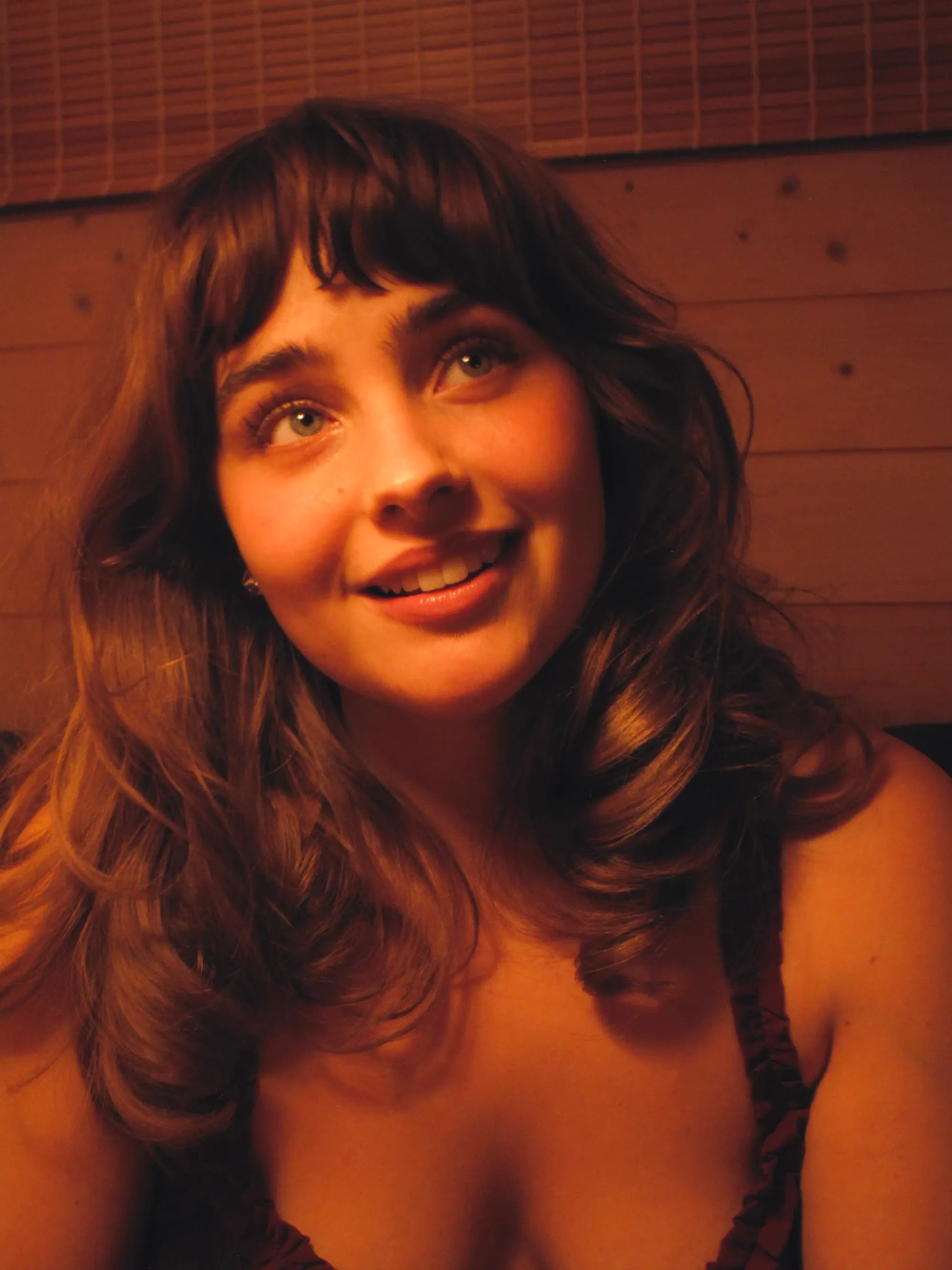
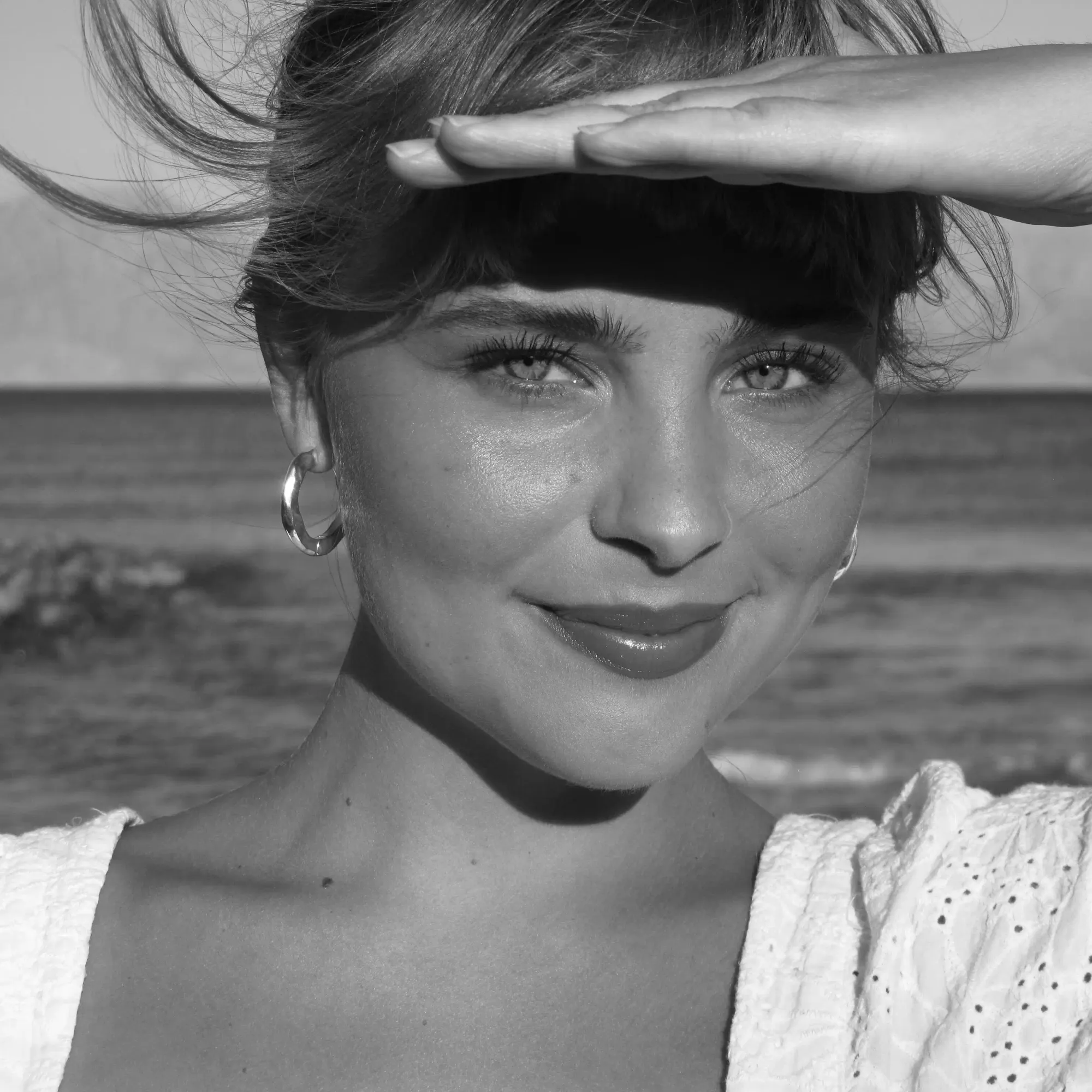
Erle Fonneland
For Erle Fonneland, vulnerability is not simply a lyrical theme but the emotional
condition that allows creation to happen. “I think vulnerability is very important. When I’m composing, that’s what I want to feel. The whole process is very vulnerable—you’re exposing yourself and your ideas, and you’re trying really hard to express something.” There is no attempt to conceal uncertainty or emotional fracture. Instead, she moves toward them, allowing memory, nostalgia, and contradiction to coexist freely.
I’m trying to create a space where I can be vulnerable and let my thoughts go where they want. It can become a nostalgic experience, because it represents me and situations that will always be a part of me. I try to create a contrast between vulnerability and strength, and let them coexist.
“I’m dreaming of a place where I can just exist.” The sentence emerges almost quietly, yet it carries the emotional weight of the entire album. In a culture obsessed with acceleration and self-reinvention, the idea of simply existing begins to feel almost radical. “I think a lot of people feel like we don’t have enough time—we’re always pushing forward. But maybe we don’t need to push at all. Maybe we can follow the moment.” Her songs do not offer conclusions; instead, they remain open to reinterpretation, changing alongside her own life.
“In my lyrics, I try to create images and spaces so I can rediscover my songs over and over. Now I feel differently about the lyrics than I did when I wrote them a year ago. A lot has happened, so I have a different perspective.”
Time, then, stops behaving like structure and begins to feel more like atmosphere. “It feels like time stops, and I can explore the moment. It’s a social thing for me, where I can discover the now alongside the other musicians, and that’s fantastic.” Improvisation moves away from technical skill toward emotional presence—listening, reacting, and inhabiting the instant collectively. “I can accept my situation and my emotions, and I can use both good and bad feelings to create something. I need my emotions to paint on the canvas with depth.”
From that suspended sense of time, the album slowly reveals its visual world. Those images appear repeatedly throughout the album: open spaces, shifting lights, colors tied to memory. “I would say it’s a very open place, in nature, with sunlight, a big blue sky, and trees. I’m actually picturing my grandparents’ home—a place where you can see the Norwegian mountains and fjords.” Her songs feel less like compositions and more like rooms inhabited by emotion, memory, and light. “I imagine my songs as different rooms with colors I’ve seen in certain situations before—compartments with different lights. I’m trying to create spaces where I can feel comfortable.”
Even the compositional process resists rigidity. “I don’t have a specific method. I’m usually sitting at the piano, using what I know, but also exploring—trying to find patterns and systems, and experimenting with chord changes that make me feel something. I’m not trying to do anything ‘correctly.’” The music emerges intuitively, shaped as much by emotion as by interaction. “Usually, a melody appears, and I often hear a
bass line. When I wrote the songs for this album, I tried to capture the personalities of my musicians.”
That sense of coexistence extends into the album’s sonic landscape. Around the voice of Erle Fonneland, piano and synthesizers by Torbjørn Säll drift between intimacy and suspension. The trumpet and bukkehorn of Ole Martin Rosvold Haugen blur the distance between the contemporary and the ancestral. Beneath them, the bass lines of Eivind Bratland and the drums of Eirik Jarl Gjølme continuously reshape the movement of the sound. Nothing feels imposed; each musician inhabits the songs with patience and openness.
Valør is an intangible place, perhaps for that reason, the kind of space one endlessly longs to return to. Here dwell voices and gazes from all times: a little girl speaking with her father, a mother imagining the sky within her hair, and the memory of mountains and fjords suspended somewhere between dream and sound. Along the Norwegian coast, the voice of Erle Fonneland drifts alongside instruments from another era and languages carrying the weight of everything already said and lived. In each song, a new shade emerges—not as resolution, but as a quiet reminder that vulnerability and strength always shine under the same light.