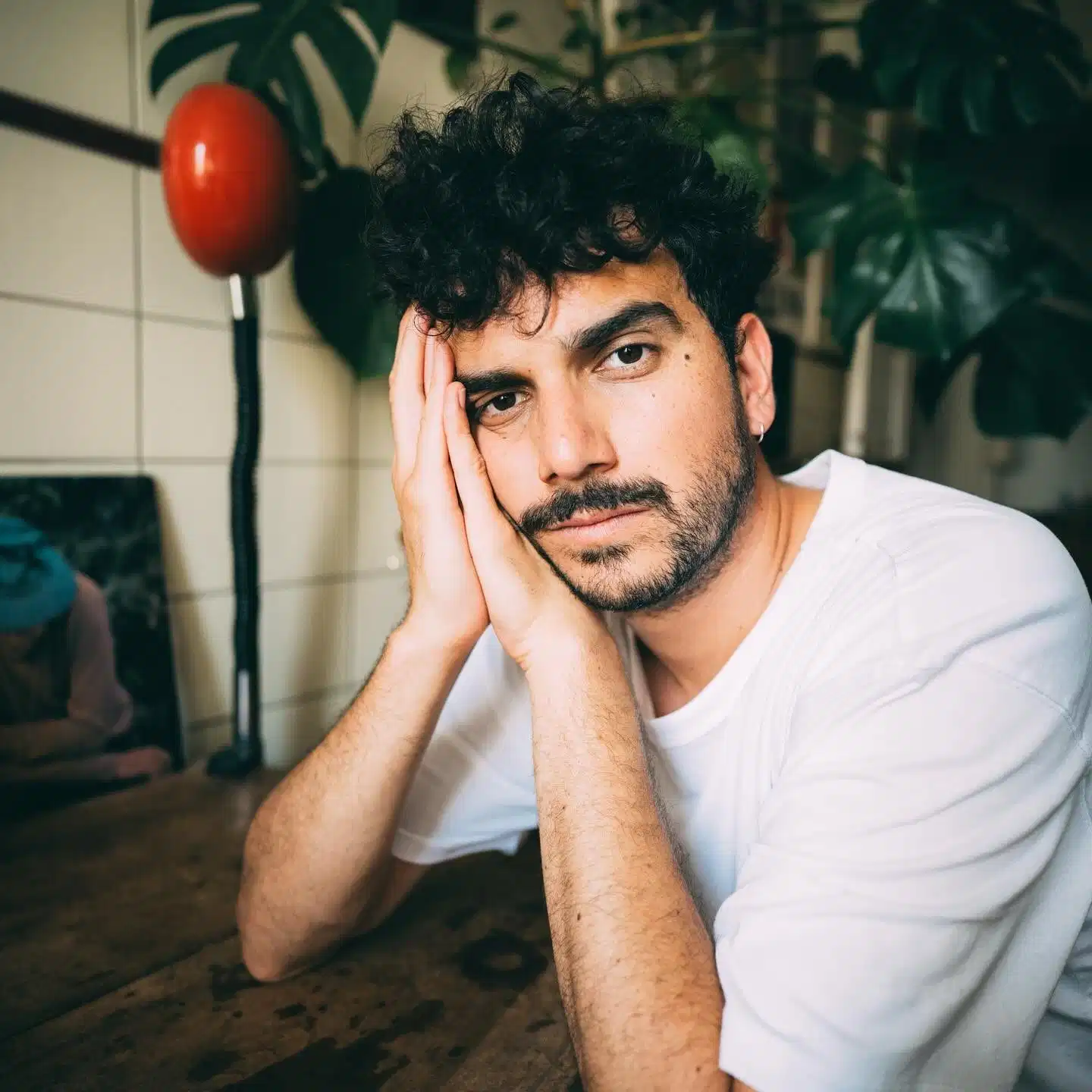
Louis Matute: A Playlist of Identity Called Dolce Vita
The tropical fantasy of progress—of iron railroads and "tutti-frutti" hats—slowly turned brown, wilting like the leaves of a banana tree. But far away in exile, the voices of the "others" began to rise. The grandmothers, the uncles, the parents—all those who refused to live under the suffocating peel of a banana skin. Yes, the echoes of a darker time are turned into sound.
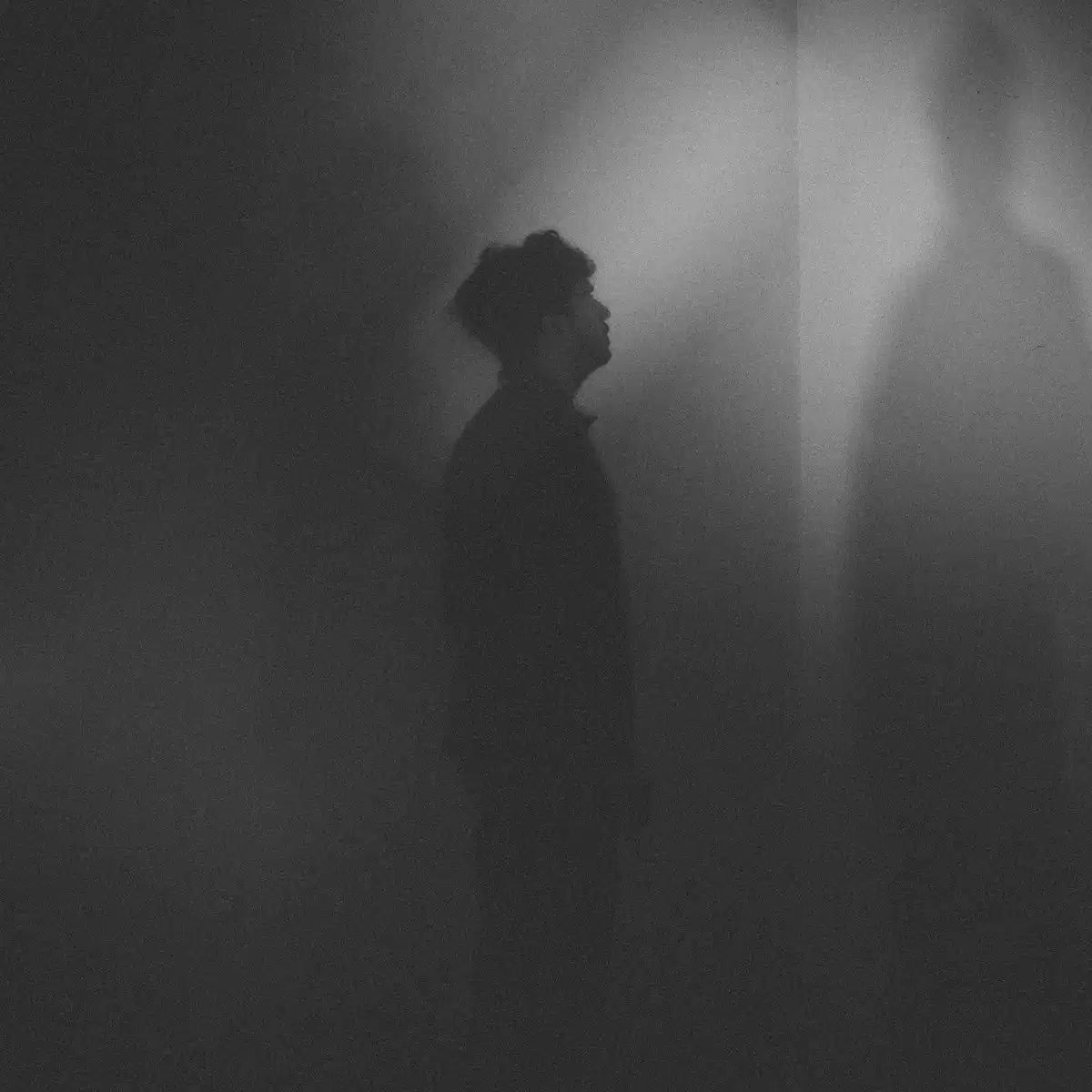
The cover of the album unveils him watching his own shadow, a silhouette projected against the wall, both intimate and distant. It is the perfect picture to ask what lies behind the music of Louis Matute—a glimpse into the blurred lines of a heritage that he merely understands. "I never fully understand my origins. My father is from Honduras, and my mother is from Germany. It's like wondering who I am, which part of me is Latino, which part is German?" He continues, "The only thing I knew for sure from a young age was that when writing melodies, I've always had these Latin sounds in my head that would appear in some way in my music."
Born and raised in Switzerland, Louis lived in a world where his Latin heritage was more a whisper than a conversation. As he recalls: "When my father migrated from Honduras to Switzerland, he just tried to adapt and be accepted in this society. I remember that it was hard for him to share his culture; he didn't even speak to us in Spanish, his mother tongue." In this context, his latest album, Dolce Vita, emerges as a canvas where he finally paints with the colors of the Caribbean sea. "It explains so much about my father, his behavior, the way he educated us, his sensibility, and so many other things. So, yes, the darkness of America was a major part of the creation of this album."
In the life of Louis Matute, multiculturalism goes beyond his parents’ roots or his Geneva postcode; it lives in his musical influences, in the rhythms that shaped his imagination, and in the melodies that opened doors to new worlds. For Dolce Vita, he even curated a playlist called Album Inspirations, a private archive of sounds that guided his writing. “I’m getting inspired by those songs and those harmonies, but I’m doing it my way. I don’t want to transcribe everything I like. If I transcribe everything, I’m afraid that when I write music, it will come out the same way those guys were doing it. So, I’m keeping a part of the naivety—the ‘dumbness,’ almost. That’s how I compose, and that’s how, for me, the magic and the authenticity can be expressed: imitating while keeping my voice.”
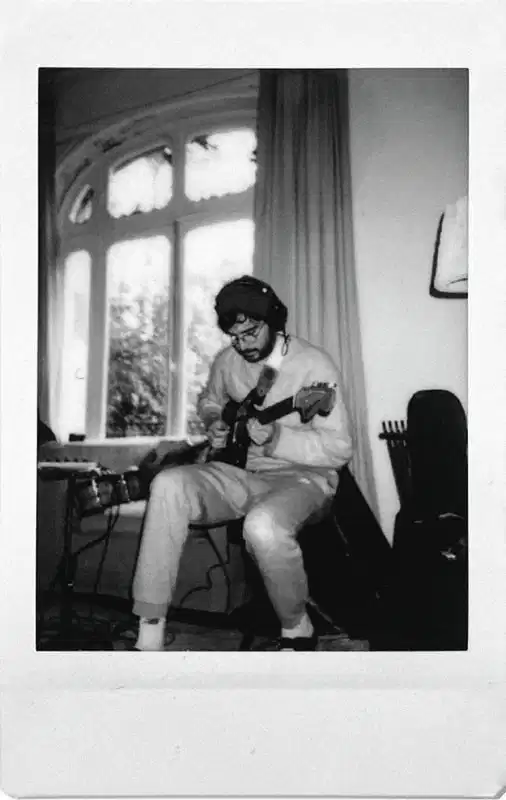
That voice, however, does not exist in isolation. It is shaped and amplified by the close relationship Louis has forged with his band. “When I compose, I know mostly how it will sound because I’m so used to these musicians. They know my personality, my tastes, and my sensibility; they know what I like in life and how I am, so I don’t have to explain too much to them. I bring the sheet music, and once we start playing, it’s not my song anymore—it’s our tune. It becomes something else, and I have no control over it. I’m just accepting that. That is what makes this music beautiful to my ears: it doesn’t belong to me anymore; it belongs to the whole band and, after that, to the sound engineer.”
This collective spirit is what makes the album so expansive. Within this trusted circle, Matute welcomes four remarkable guests whose presence enriches the album’s palette. With Gabi Hartmann, the connection was instant, rooted in a years-long friendship and a shared devotion to Brazilian sounds. In Rio, he found a contemporary soul in Dora Morelenbaum, whose voice carries the immense heritage of MPB in her veins, yet speaks with the creative freedom of a new generation. The album even finds space for the urban pulse of Geneva through Rico TK, whose powerful rap presence transformed a simple spoken-word idea into a storytelling force that expanded the album’s palette.
But perhaps the most profound encounter was with the legendary Joyce Moreno. What began as a tour in Geneva blossomed into a friendship that took them back to Rio, resulting in the ultimate privilege: Moreno wrote the lyrics for "O que é amor " (What is love?). In an album born from shadows and silence, her words reframed the album, turning silence into poetry and heritage into song. As Louis reflects: "It was so nice. It was refreshing and almost political in a way."
However, the beauty found in these collaborations and the vibrant colors of the Caribbean sea do not mean that Louis has forgotten the darkness he mentioned earlier. In fact, the very name of the album serves as a final, sharp layer of meaning. Even as the music dances with light, its title insists on irony — confronting the shallow lens through which his heritage is often viewed.
“The title is a critique,” Louis explains. “Many Europeans romanticized Central America. Their view is full of clichés: the warmth of the people, the kindness, the beaches, the beautiful nature, and all that ‘pura vida’ stuff. So I chose this ironic title to say, ‘Okay, those things may exist, but they don’t define the whole continent.’ There is a backstory behind it that is darker.”
Dolce Vita is not an escape, but a confrontation. It is a work that transforms memory, heritage, and irony into sound, reminding us that beauty and darkness often coexist within the same melody. Through this journey, music has allowed Louis Matute to bridge the distance between himself, his father, and the echoes of his family’s past. Perhaps, after these conversations and the creation of this album, he is left with even more questions about his origins. Yet what he has gained is far more resilient: a soundtrack to listen to while piecing together the puzzle of identity.