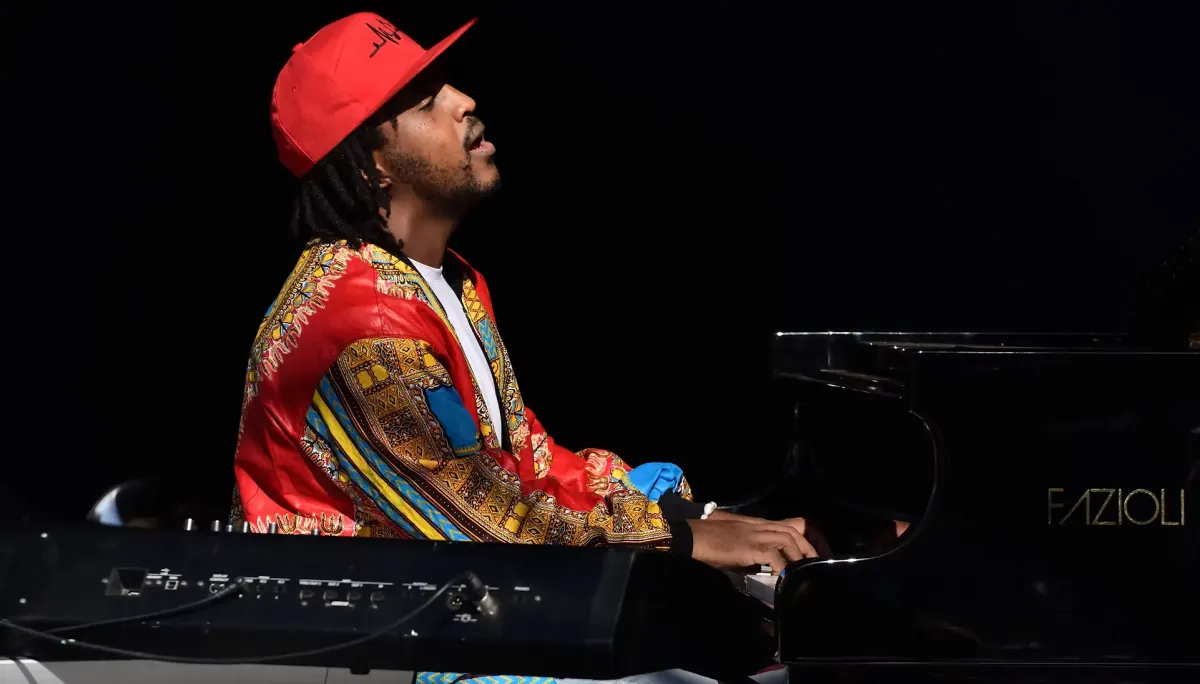
Mpumi Dhlamini: Many Worlds, One Voice
Anchored in perpetual motion. His compositions reveal a fixation on movement, allowing sounds to travel beyond the traditions they evoke. As the music unfolds, melodies are shaped less by styles than by the regions they explore. Here, borders exist to be crossed, bringing us closer to rhythms we might never have heard before. By the time a track reaches its final notes, it has undergone so many progressions that you find yourself asking how it all began.
In his creative philosophy, identity isn't something to be preserved intact, but an evolving expression that can expand through exploration. Multi-instrumentalist, producer, and teacher, but above all, a nomad. Mpumi Dhlamini has remained on a constant quest, not necessarily to fit in, but to discover what lies beyond his comfort zone. “When we say jazz, we're speaking about a rebellion,” he explains. “It's not about conforming to what everybody else is doing.”
But how much freedom remains when an artist is expected to please an audience? “When you study jazz, they tell you that jazz is freedom; full-on expression,” he recalls. “But the other day I heard someone complaining that musicians don't cater to their audience. I think that’s where we start to lose the freedom, because the minute you start over-catering to an audience, it’s technically no longer jazz; it’s pop.”
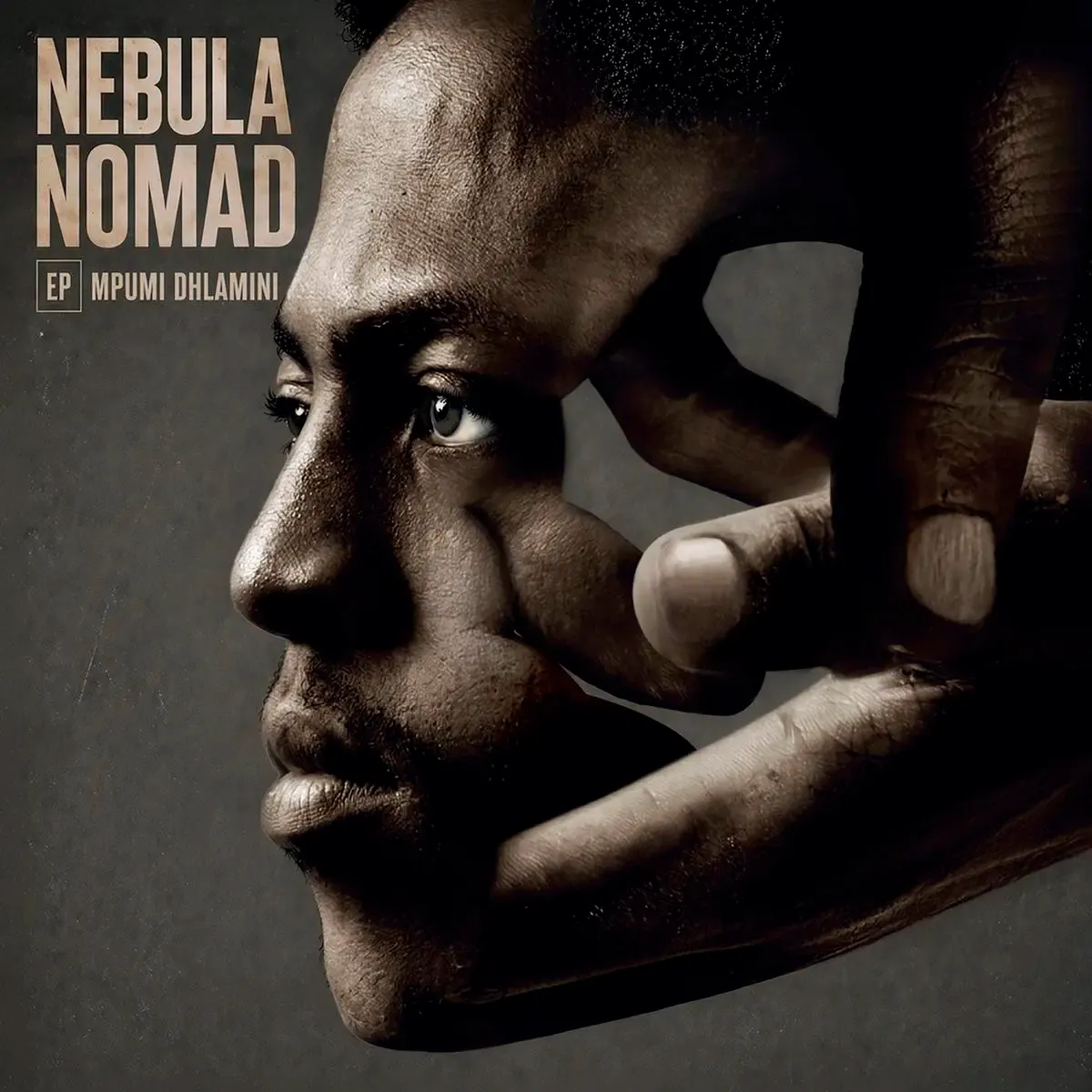
Beyond the abstract realm, his philosophy takes shape in each composition. “I don't think in music styles; I think in countries.” His latest release, Nebula Nomad EP, brings those words to life. Released by Afrosynth Records, the three-track record draws from his 2024 album of the same name, bringing reimagined versions of “The Higher Being” and “Sibusise Nkosi,” alongside the original recording of “Culmination,” to vinyl for the first time.
Faced with an inexhaustible universe, why return to old compositions? “It's about how a song matures, in the sense that just as we grow as people, we should allow the music to grow as well,” he explains. Revisiting a composition, then, is not an admission of failure. “I'm not saying the first version was a mistake; I'm simply saying that the song has grown, and this is where it is now.” For Mpumi Dhlamini, a nomad is someone who wanders, tries, and explores—even within his own creations.
In his search for new sounds, Mpumi Dhlamini approaches music like an anthropologist, drawing inspiration from distant places and unexpected encounters. “Asian music influences me a lot just from watching Bruce Lee movies,” he shares. Yet inspiration is not always a conscious choice. “I always tell my students to be aware when listening to music, because you may never decide what influences your compositions.” He still remembers the day someone introduced him to Gonzalo Rubalcaba's music, an encounter that continues to shape his music.
A world of languages within a single composition. “In The Higher Being, at the beginning, I sing in Venda, which is one of our official languages in South Africa, and probably the hardest one, actually,” he states. “Then further along, towards the middle, when the track switches to a neo-soul, hip-hop-ish vibe, I switch and sing in Shona, a language spoken in Zimbabwe." His musical compass points in several directions at once. “I like the phonetics and how they land. What was nice about it is that it has this exotic quality, and that's exactly why I went for it: it sounds like an ancient language, especially with the way I sang it. I was using a lot of Japanese influence, which is why you hear a koto playing in the background. Essentially, I was singing African dialects with a Japanese approach, while chanting it as though I were in Mongolia.”
No map can replace the hours spent playing. Beyond his personal projects, Mpumi has spent years composing for film and television, including Sesame Street. For him, inspiration doesn't arrive through extraordinary experiences; sometimes, all it takes is an instrument. “Someone asked me, ‘What was happening when you composed The Higher Being?’ I told her, ‘Nothing.’ For me, I write so much, and I trust my instincts. The minute I sit at the instrument, I can compose just by touching it.”
The same hours of practice that allow him to compose without a mystical encounter with inspiration have also shaped his approach to one of jazz's defining elements: improvisation. “If you can't improvise, how do you express yourself? Ultimately, for me, it's about expression and always pushing boundaries. It's easy to play two or five lines and play a swing: we can all do that, but we need to push things forward.”
Improvisation is sitting down and asking, how can I do this differently?
Yet expectations placed on jazz musicians have turned improvisation into something of an obligation. “Back in the day, some guys were brilliant composers, arrangers, or session musicians without the need to be brilliant improvisers. Now, we've made it seem like everybody should play like Arturo Sandoval. Some guys can do it, and some musicians shouldn't necessarily have to.” For Dhlamini, jazz offers more than one path to artistic expression. “Still, I'm giving this narrative especially to up-and-coming jazz musicians: even if you're not the best improviser yet, you still belong. There are many worlds within this world.” His argument extends beyond improvisation. “In fact, we don't have enough jazz producers, which is why many albums sound like one long session.”
Like his new vinyl record, the globe keeps spinning. At some point, the music will stop, leaving a single question suspended in the air: where will this nomad go next? May these words capture a small fragment of his life. Mpumi Dhlamini: a sonic traveler determined to share new rhythms with the world.