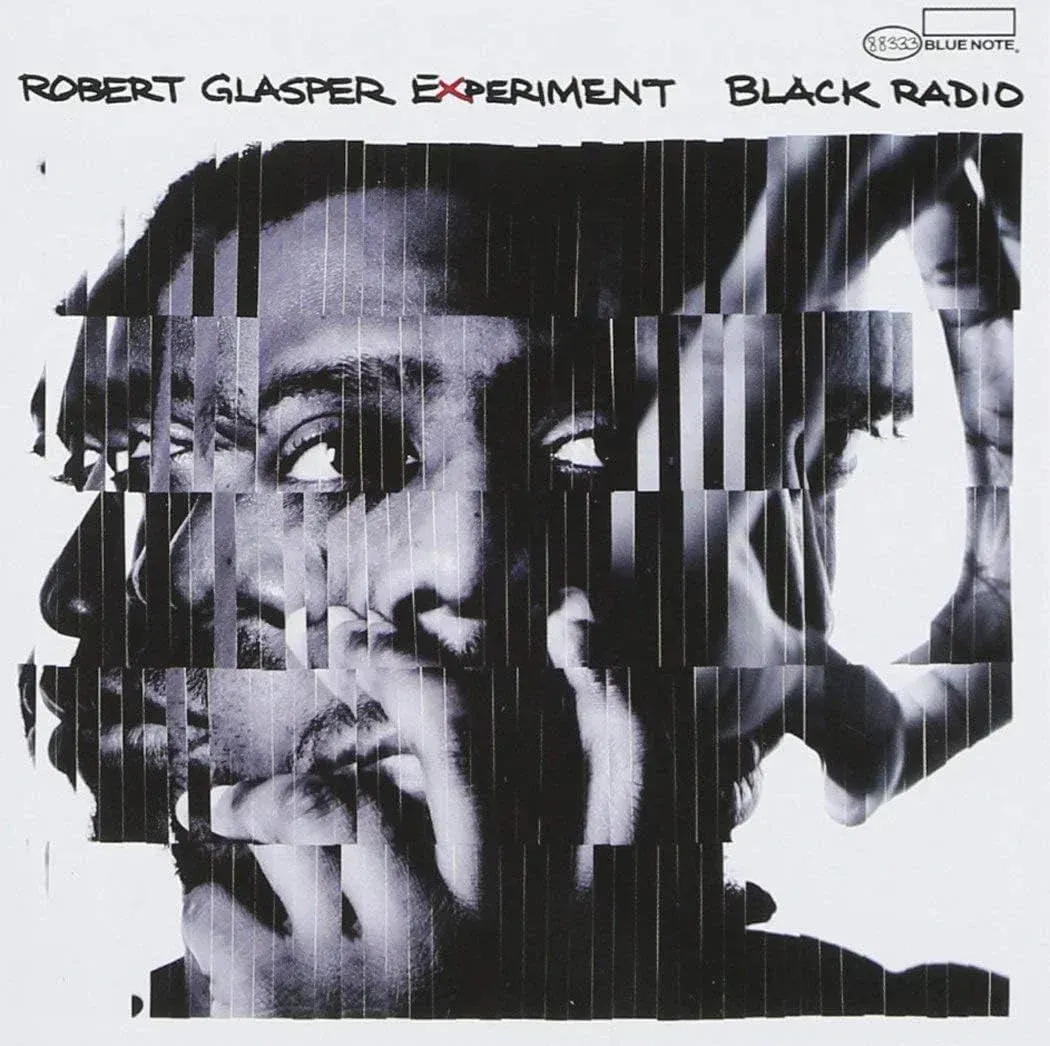
Black Radio – Robert Glasper Experiment
Black Radio imagines a frequency where Erykah Badu can sing “Afro Blue” and Nirvana can appear a few minutes later without the journey between them requiring an explanation. Robert Glasper, together with Chris Dave, Derrick Hodge, and Casey Benjamin, creates a space where jazz, hip-hop, R&B, soul, and rock can recognize themselves as parts of the same conversation.
The transformation happens from within. On “Afro Blue,” the Mongo Santamaría standard sheds much of the familiarity of its previous incarnations as Badu’s voice settles over a pulse that thinks as much in hip-hop as it does in jazz. Daveplays with the fragmented precision of a beat while continuing to respond like an improviser, as Glasper’s piano slips in and out of the spaces between them. “Always Shine” extends that logic to Lupe Fiasco and Bilal: rap, song, and improvisation stop claiming separate territories and begin to function within the same architecture.
“Smells Like Teen Spirit” pushes the idea even further. Casey Benjamin sends Kurt Cobain’s melody through a vocoder, turning one of the most recognizable songs of 1990s rock into something strangely distant. Hodge and Davehold the center while piano, voice, and electronics gradually reshape the piece; what begins as something familiar moves toward abstraction. Where the song came from matters less than what can happen once the Experiment brings it into its own language.
Perhaps that is why Black Radio still carries such force: it was not trying to decide where jazz should go next, but to expand the places where it could exist. Yasiin Bey, Meshell Ndegeocello, Ledisi, Lalah Hathaway, Musiq Soulchild, and the rest of the album’s guests do not enter Glasper’s world from separate genres; together, they reveal how porous those boundaries already were. More than a decade later, listening to the album means tuning into a frequency that once seemed improbable and now feels remarkably familiar.