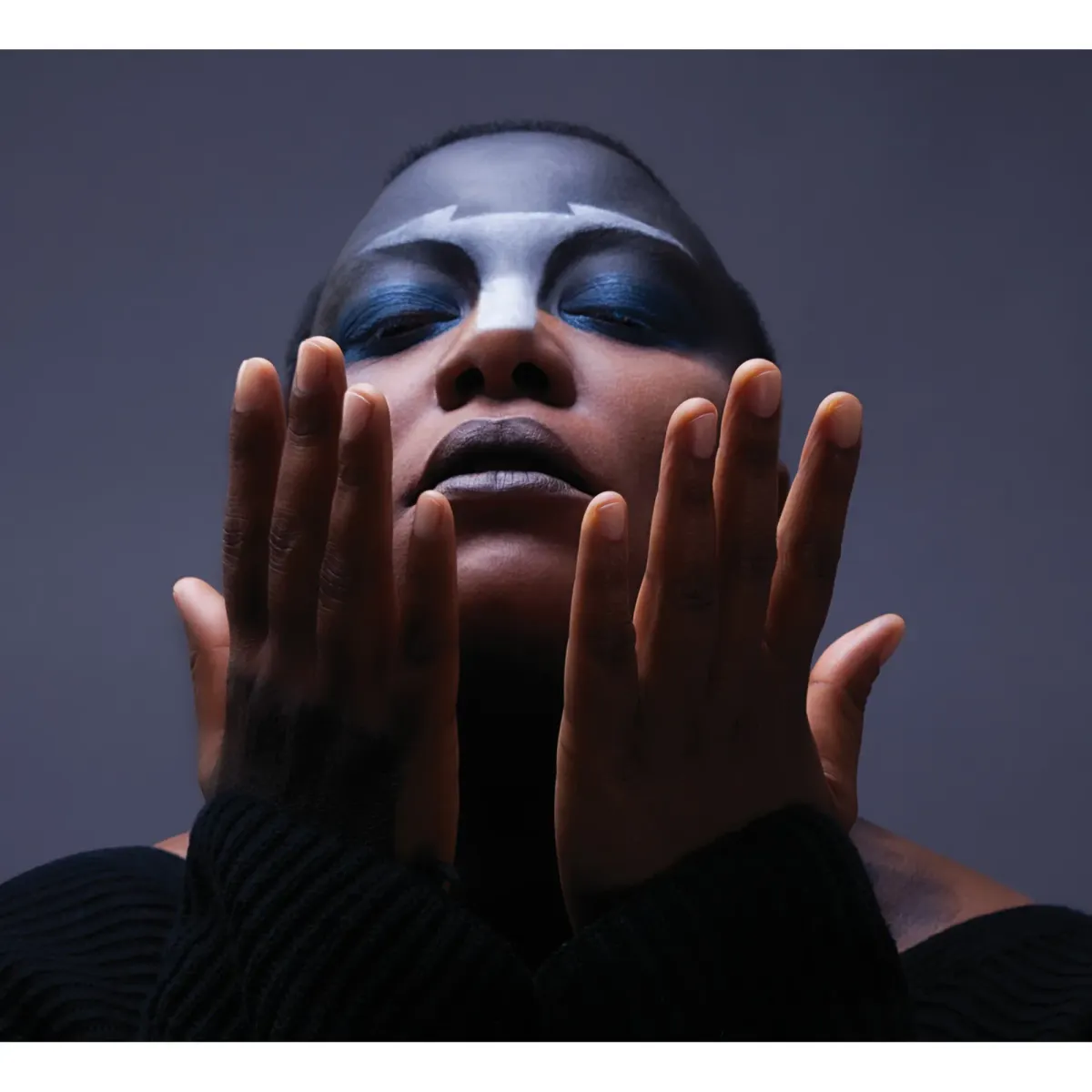
Comet, Come to Me – Meshell Ndegeocello
On Comet, Come to Me, Meshell Ndegeocello seems drawn to everything that can happen when music leaves enough room to breathe. Bass, guitar, keyboards, and percussion rarely compete for the center; instead, they emerge as patterns that intersect, disappear, and return transformed. Through that motion, the album creates a space where soul, dub, rock, jazz and electronic music stop behaving like genres and become parts of the same language.
The transformation begins with “Friends.” Ndegeocello takes the Whodini classic and dismantles much of its original architecture: the familiar synth line reappears as a guitar figure, while a fragmented rhythmic foundation supports an almost mechanical vocal delivery. What was once a question about friendship acquires a sense of distance, as though trust itself could also erode through repetition.
That logic reaches one of its fullest expressions on “Comet, Come to Me.” Over the depth of dub, Ndegeocello’s bass anchors a composition built in layers, while Jebin Bruni’s keyboards, Chris Bruce’s guitar, and Earl Harvin’s drums and percussion allow each element to retain its own space. Shara Worden’s voice intertwines with Meshell’s until the boundary between lead and accompaniment begins to dissolve. Desire becomes circular: what we try to leave behind eventually finds its way back.
The same principle produces different results on “Forget My Name” and “Modern Time,” where reggae and dancehall rhythms become elastic and atmospheric, while “Folie à Deux” strips the music down until movement emerges from the space. “Conviction,” by contrast, needs very little to reach one of the album’s most emotionally incisive moments: watching someone repeat what continues to hurt them and realizing that loving them does not mean you can save them.
The album’s apparent calm conceals a persistent unease. Fractured relationships, cruelty, religion, identity, and the contradictions of life surface without becoming grand declarations. Even as “American Rhapsody” carries the album toward its conclusion, Ndegeocello prefers to leave questions suspended rather than resolve them.
Comet, Come to Me finds its depth precisely in that refusal to overcrowd the space. Meshell Ndegeocello understands that repetition does not mean standing still: a pattern can return again and again and, with every cycle, reveal something that had previously remained hidden.