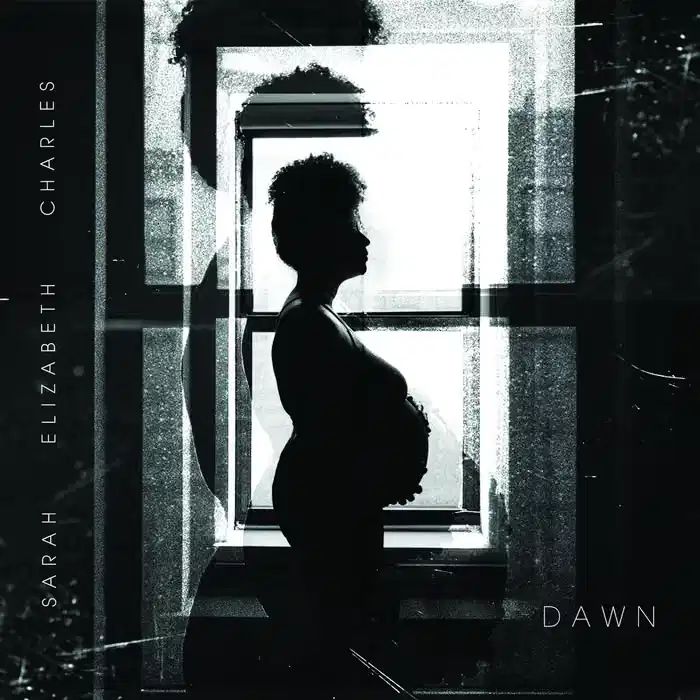
Dawn – Sarah Elizabeth Charles
In Dawn, Sarah Elizabeth Charles builds a space where life experience is not merely translated: it is lived through. From this vantage point, the voice ceases to be the center and becomes the link, articulating a language that moves between the intimate and the collective without needing to resolve that tension. It is an album that develops an approach to contemporary jazz centered on experience, personal narrative, and the collective construction of sound.
The ensemble—featuring Maya Keren, Linda May Han Oh, Savannah Harris, Skye Steele, and Marika Hughes, along with string arrangements by Jarrett Cherner—functions as a sensitive body, capable of sustaining emotional density without saturating the discourse. Every intervention is inscribed in a logic of care: nothing intrudes, everything emerges.
The album unfolds as a sequence of states where time dilates. From the nearly suspended opening of Rainbow J to the expansive affirmation of Mother, the music moves forward without dramatizing its own turning points. Even in moments of higher intensity—Plans or Angel Spark—the writing avoids emphatic gestures, opting for an expressiveness that filters through from the inside.
There is a precise architecture, yet it is never rigid. The harmonic and timbral work—especially in the interaction between the strings and the rhythmic section—builds shifting surfaces where the voice can move with freedom. The subject matter of the record—loss, birth, transformation—is organized not as a story, but as a presence. Each piece holds its own emotional field without hierarchy. Improvisation functions as a way of inhabiting the here and now.
Dawn asserts itself in a delicate balance: a music that exposes itself without losing structure, that opens up without diluting. What emerges is a state of clarity in motion, where every sound seems sustained by something deeper than its own form.