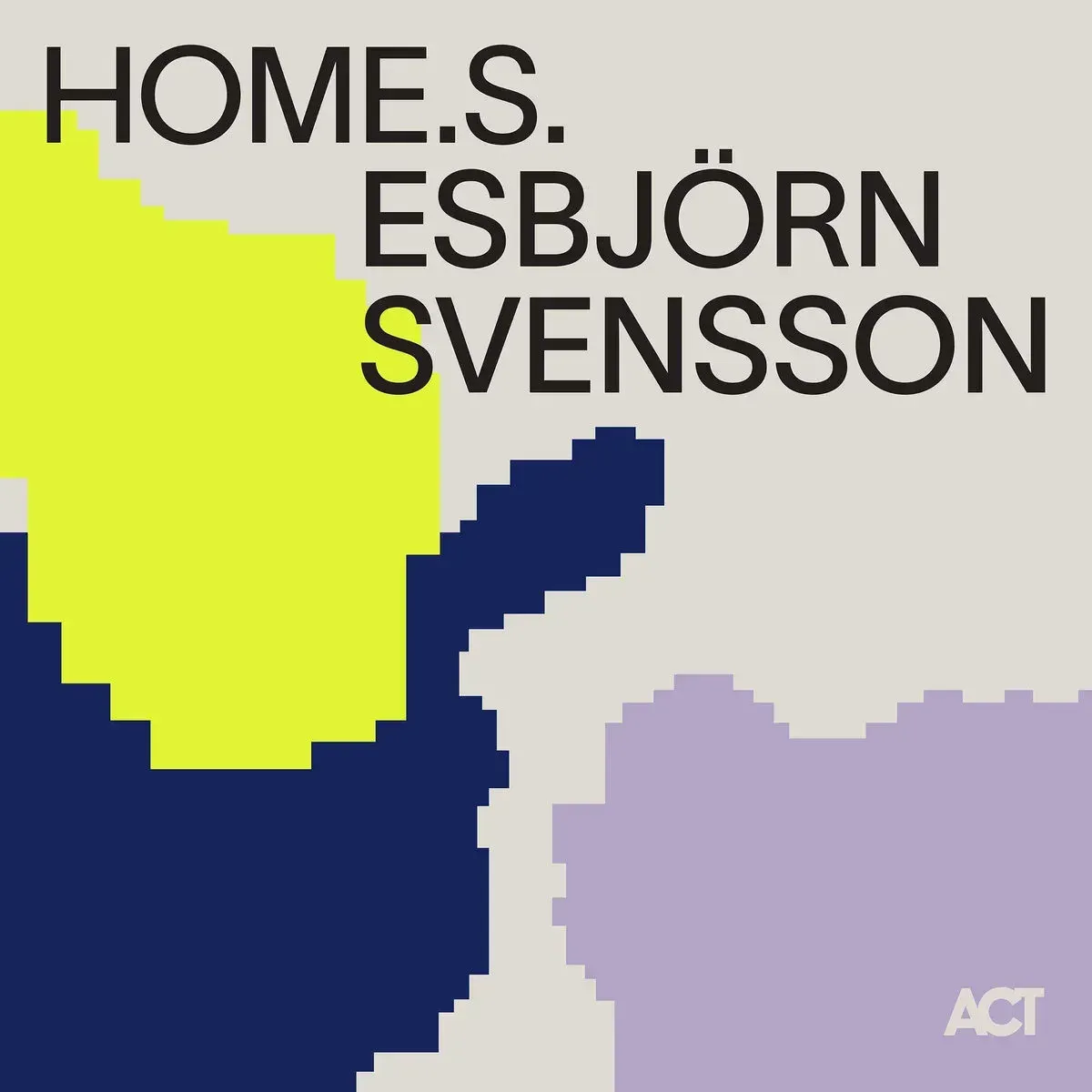
HOME.S. – Esbjörn Svensson
For much of his career, Esbjörn Svensson built his musical identity through conversation. His piano found in Dan Berglund’s bass and Magnus Öström’s drums a space where melody, improvisation, rock, electronics, and jazz could coexist, shaping a language recognizable within just a few bars. HOME.S. suddenly removes that conversation, leaving Svensson alone at the piano.
The nine pieces were recorded at his home in Sweden just weeks before his death on June 14, 2008, and remained on a hard drive for years until his wife, Eva Svensson, discovered them. Listening to the recordings with engineer Åke Linton, she found something rarely encountered elsewhere in his discography: an extended document of Svensson playing entirely on his own.
HOME.S. makes it possible to hear, with unusual clarity, just how much lay behind the economy of his musical language. Svensson possessed a technique capable of taking him far beyond what he usually chose to reveal, yet here too he seems uninterested in displaying it. In “Alpha,” he allows a figure to unfold slowly; “Gamma” takes on shades of blues and gospel; “Zeta” finds depth in the repetition of a simple motif, while “Eta” gradually transforms a rhythmic cell without rushing toward resolution.
Named sequentially after letters of the Greek alphabet — from “Alpha” to “Iota” — the pieces sometimes approach the territory of the étude or classical prelude. Some feel complete; others retain the sense of an idea still left open. It is impossible to know whether Svensson imagined turning them into compositions to be developed in a trio setting or simply keeping them as part of his private work. That uncertainty belongs to the album and is best left unresolved.
It is equally impossible to listen to HOME.S. without thinking about what happened only weeks later, but reducing these recordings to a farewell would impose a meaning their author never had the opportunity to give them publicly. Their real weight lies elsewhere: across nine pieces, we hear Esbjörn Svensson without a stage, without a trio, and seemingly without any need to explain who he was. Perhaps that is why his music has rarely seemed so close to the person behind it.