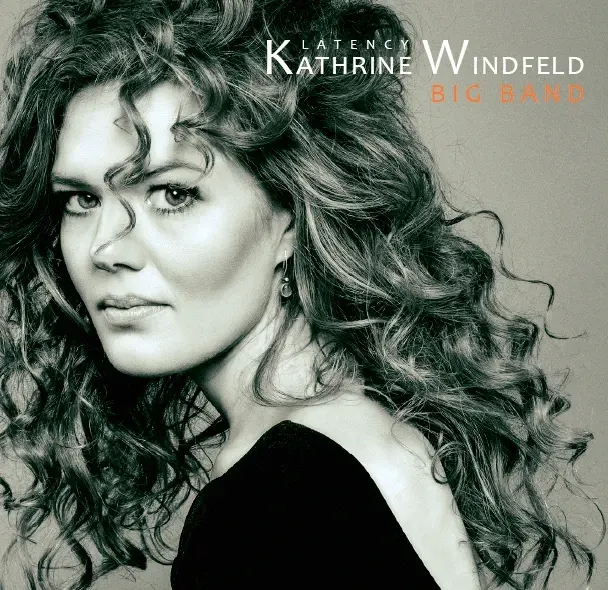
Latency – Kathrine Windfeld Big Band
The architecture of a contemporary big band often finds itself caught between the weight of heritage and the urgency of the avant-garde. In Latency, Danish pianist and composer Kathrine Windfeld resolves this dilemma by transforming her big band into a machine of drastic contrasts, where the sheer magnitude of the ensemble coexists with an almost symphonic flexibility. Fronting a predominantly Scandinavian lineup, Windfeld builds a distinct, sophisticated vocabulary laced with a rhythmic tension closely related to rock.
The album unfolds through the geographic and stylistic diversity of its members. Figures like Jakob Lundbak on alto sax, Mikkel Aargard on trombone, and Viktor Sandström on electric guitar deliver the opening salvos in the fiery introduction of "Rude Machine," a piece that disproves its own title through a subtle spectrum of dynamic nuances. It is precisely this alternation between controlled fury and introspection that gives the record its organic pulse; "Elak" extinguishes the fire to open a lyrical space where Rolf Thofte Sørensen's flugelhorn and Johannes Vaht's double bass engage in dialogue, guided by the leader's piano.
There is a deliberate quest in Latency to expand the traditional harmonic territory of the format. In tracks co-written with the enigmatic Mads Sandberg, such as the remarkable "Wasp," the ensemble flirts with atonality and textures that mimic nature. Ida Karlsson’s tenor sax dives into passages bordering on free jazz using extended techniques before the track mutates into a powerful, rumba-infused groove.
Conversely, pieces like "December Elegy" or the evocative ballad "Leaving Portland"—the latter sustained by the melancholy of Magnus Oseth's trumpet—demonstrate an innate capacity for pastoral beauty and cinematic impressionism. The album closes with the irreverence of "Double Fleisch," where Göran Abelli's trombones and the horn arrangements turn subversive.
With this sophomore effort, Windfeld solidifies her position as one of the most lucid minds in European jazz, proving that a big band can simultaneously be a monolithic block of mathematical precision and a sanctuary for the soloist's unpredictability.