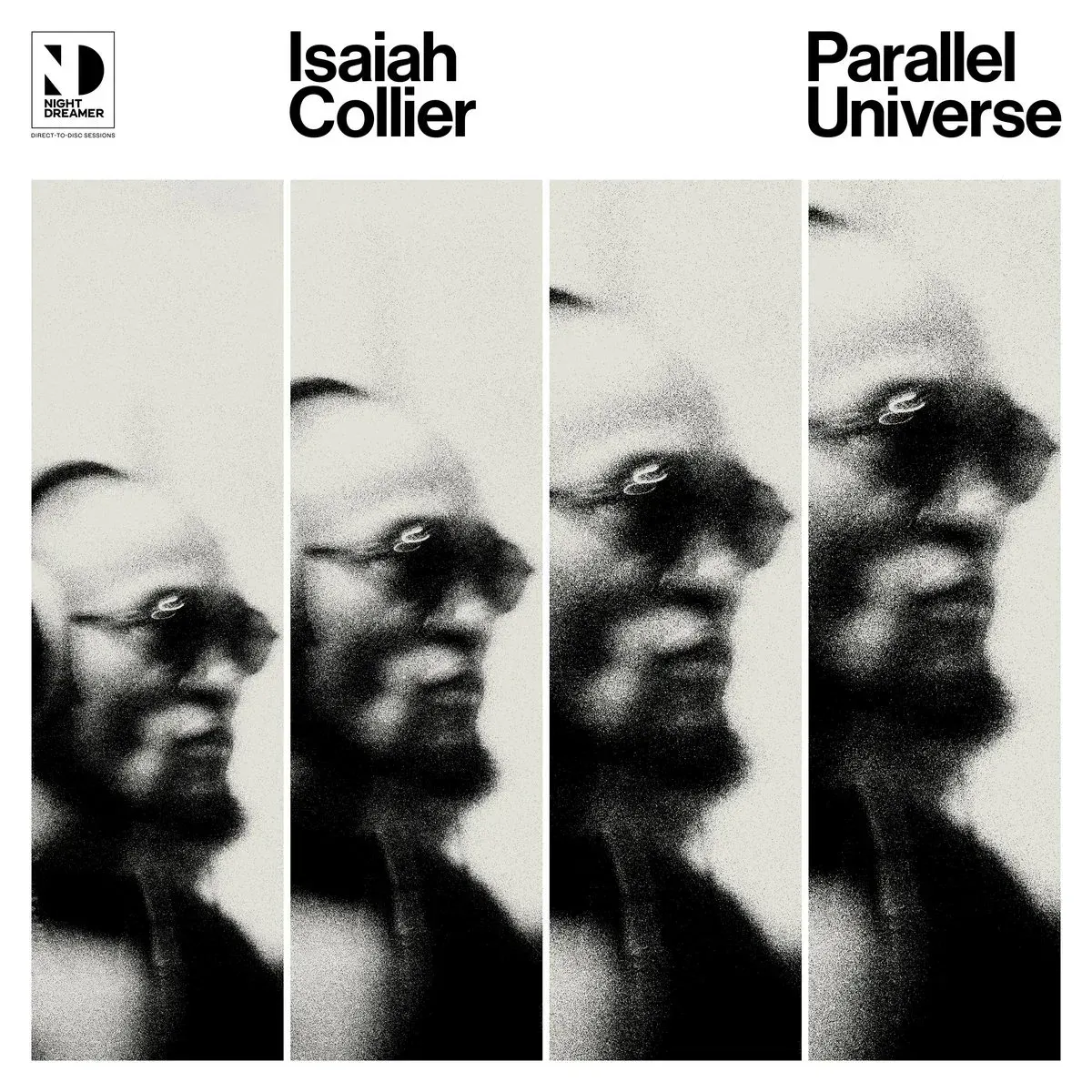
Parallel Universe – Isaiah Collier
In Parallel Universe, Isaiah Collier understands tradition as a conversation that can travel across generations without becoming trapped in any of them. “Eggun” opens the album by naming Sun Ra, Nina Simone, J Dilla, Fela Kuti, Miles Davis, and other figures in Black music as part of a genealogy Collier has no intention of reproducing: he acknowledges them to discover how far he can take what he inherited from them.
That search takes on another dimension in “Village Song.” Over percussion, Ra’s kalimba, and vocals in Yoruba, Collier trades the saxophone for the flute as part of a deliberate return to sounds that predate the instrument that usually defines him. Across thirteen minutes, the piece moves through African rhythms, Afro-Cuban syncopations, and a swing reminiscent of John Coltrane in the mid-1960s. It does not attempt to reconstruct a lost origin; it imagines how that origin continues to transform after the diaspora.
The movement reverses on “Parallel Universe.” If “Village Song” looks backward, the title track projects that memory forward. Julian Reid’s keyboards, Micah Collier’s bass, James Russell Sims’ drums, Michael Damani’s guitar, and Corey Wilkes’ trumpet create a space where swing coexists with synthesizers, funk, and an Afrofuturist imagination, while Jimetta Rose’s voice seems to move between different frequencies.
“Retreat” carries that same freedom into gospel and soul, while “Open the Door” narrows the scale, allowing the voices of Rose and Collier to seek a more earthly kind of intimacy. On “The Last Song,” a piano motif sustains a farewell that stretches across ten minutes, through voices, saxophone, and a band that seems reluctant to leave the session behind.
Recorded direct-to-disc, without overdubs, Parallel Universe preserves precisely that feeling: eight pieces unfolding as the musicians decide in real time where they can go. The story that begins by naming the ancestors on “Eggun” ends without trying to sound like them.