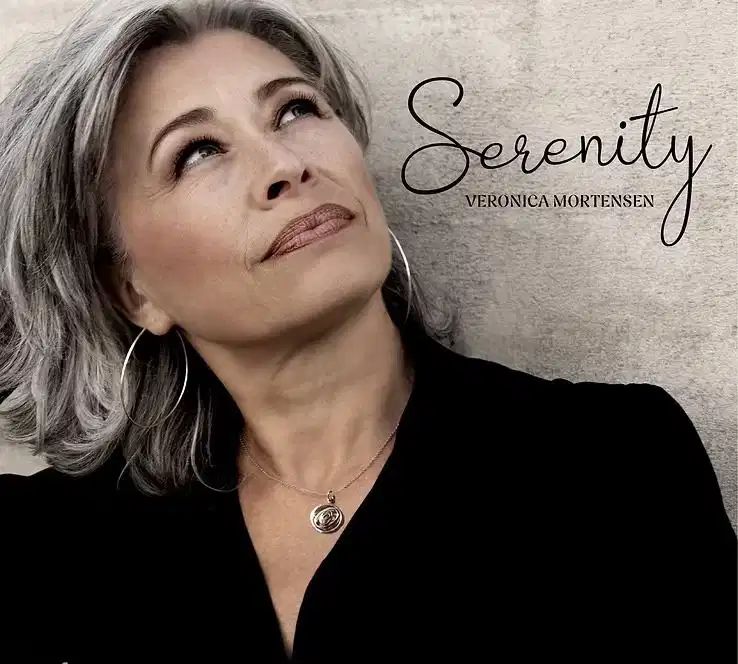
Serenity – Veronica Mortensen
In Serenity, Veronica Mortensen shifts the focus toward the essential: the song as a space of equilibrium. There is no excess here, no unnecessary gestures; every element seems placed with a precise awareness of time, silence, and the emotional weight of form.
The album is built around original compositions where the voice functions as both the narrative and timbral axis. Mortensen does not seek to impose herself; instead, she opens up a space where melody and lyrics breathe naturally. Her phrasing moves with a clarity that allows every word to find its place.
The quartet accompanying her —Peter Asplund (trumpet), Henrik Gunde (piano), Jesper Bodilsen (double bass), and Andreas Svendsen (drums)— creates an environment of high dynamic sensitivity. This is not accompaniment in the traditional sense, but rather an interaction in which every intervention redefines the contours of the piece. There is a deliberate economy in the arrangements that avoids saturation, allowing the music to move forward through suggestion rather than assertion.
The trumpet appears as an extension of the voice’s emotional register, while the piano organizes the harmonic space with sobriety. Conceptually, Serenity revolves around acceptance: not as a resolution, but as a process. The compositions address the passage of time, personal transformation, and the need to find stability amidst contemporary noise. This reflective dimension translates into a form of conscious lightness, where even humor appears filtered through experience.
Each piece functions as a microclimate where the narrative unfolds without structural rigidity. The vocal jazz tradition is present, yet shifted toward a more intimate language, close to the contemporary Nordic aesthetic: clarity, space, and an organic relationship with silence.
Serenity does not seek to redefine the format, but to refine it. It finds its strength in that very reduction: music that moves without haste, with precision, and sustains active listening through subtlety.