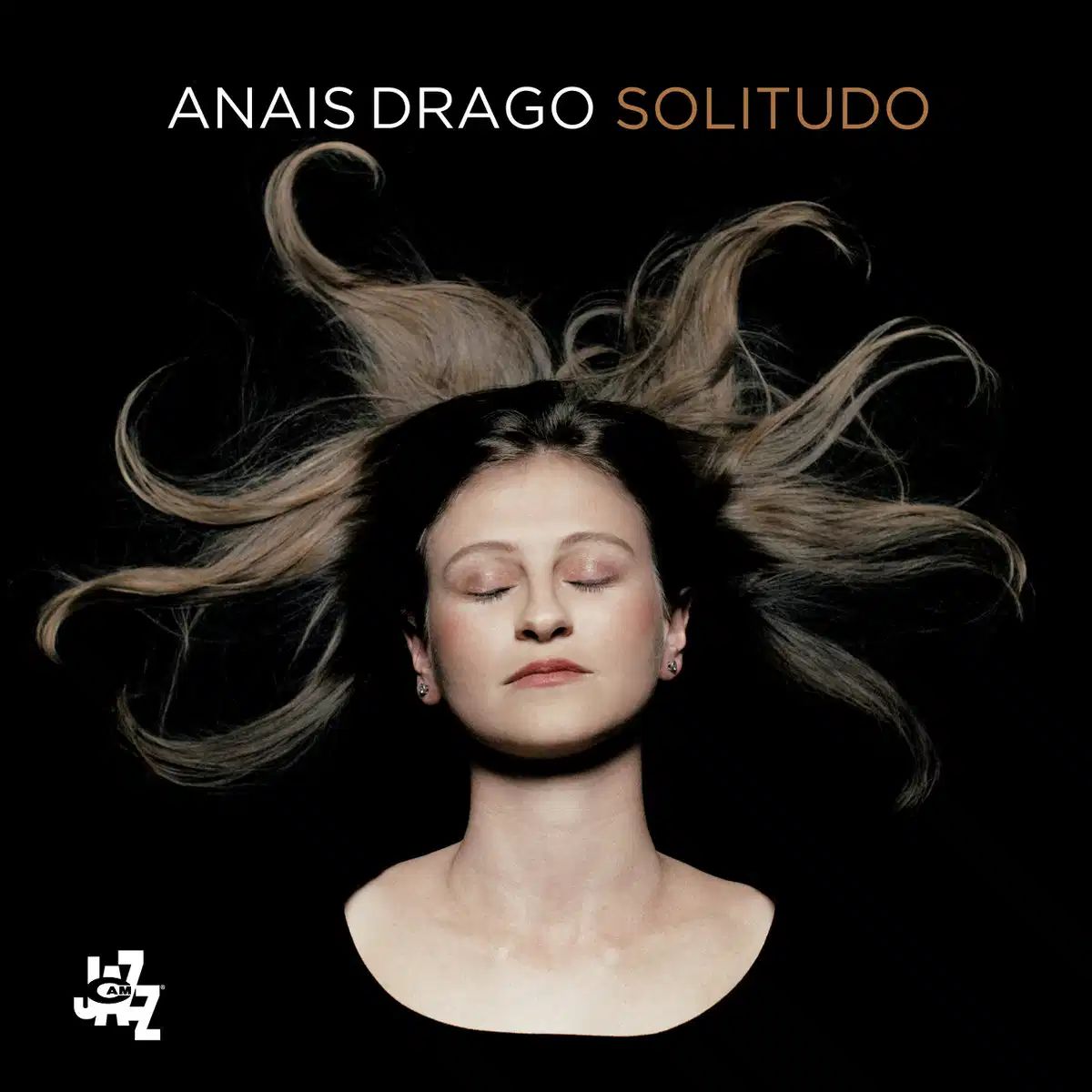
Solitudo – Anais Drago
The violin unfolds here as a complete system. In Solitudo, Anais Drago constructs a language in which instrument, electronics, and voice operate as a single entity in constant transformation.
The starting point is solo, but the listening experience never feels that way. Through loops, overdubs, and processing, Drago expands the violin until it becomes an architecture of layers where each line generates its own space. This accumulation does not follow an ornamental logic, but rather a direct exploration of the instrument's timbral possibilities.
The relationship with tradition appears displaced. There are echoes of early jazz virtuosity—in the vein of Joe Venuti or Stuff Smith—but they are integrated into an environment where the spectral, the fragmented, and the narrative coexist without clear hierarchies.
The material moves between contrasting registers: passages of almost cinematic density, close to an aesthetic of tension and estrangement, and moments where the gesture becomes light, even playful. This oscillation defines the pulse of the record, maintaining constant mobility between the abstract and the immediate.
Each piece functions as a study of a different possibility for the violin. The writing incorporates elements of Drago’s classical training, but also procedures from contemporary jazz, free improvisation, and electronic manipulation. Everything is integrated into a continuous flow where the identity of the instrument remains recognizable even in its most transformed states.
Solitudo is built upon a clear idea: to push the violin to the limit of its own definition and, from there, reorganize it as an open space. The result is music of high technical precision that simultaneously preserves a constant sense of risk.