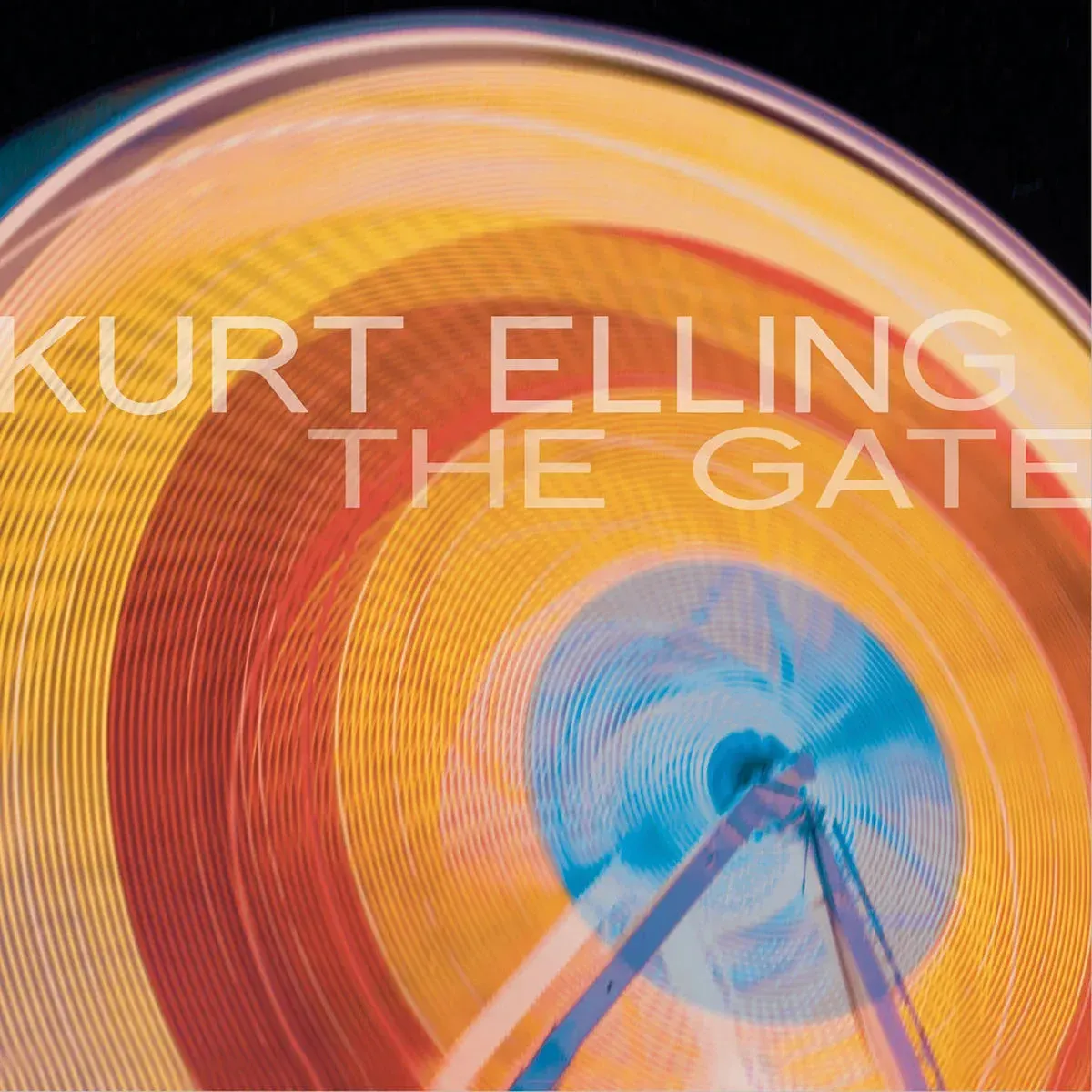
The Gate – Kurt Elling
Kurt Elling has a voice capable of transforming a familiar melody into an entirely different experience. His baritone can reach an almost confessional intimacy and, moments later, venture into registers that seem to belong to another instrument. On The Gate, released in 2011 and produced by Don Was, the American singer brings that freedom to a repertoire featuring compositions by King Crimson, The Beatles, Joe Jackson, Stevie Wonder, and Herbie Hancock. Where these songs come from matters less than a far more intriguing question: how much can a melody change when someone discovers a new way to inhabit it?
“Matte Kudasai,” by King Crimson, opens the album with extraordinary delicacy. John Patitucci’s double bass anchors a performance in which Elling seems to stretch each word until its emotional weight is fully revealed. On “Norwegian Wood,” the familiarity of Lennon and McCartney’s composition dissolves into shifting rhythms, layered vocal harmonies, and John McLean’s electric guitar. Both pieces reveal the same musical curiosity, yet arrive at entirely different destinations.
His relationship with pianist and arranger Laurence Hobgood is essential to understanding this exploration. On “Blue in Green,” the celebrated composition associated with Miles Davis and Bill Evans, his voice finds a moving depth, while “Samurai Cowboy,” built around a piece by bassist Marc Johnson, reveals another side of the singer: percussive, playful, and remarkably close to instrumental improvisation, accompanied by Bob Mintzer’s tenor saxophone. With Terreon Gully and Kobie Watkins alternating on drums and Lenny Castro adding percussion, the ensemble responds to every transformation with a natural ease that makes the complexity of the arrangements almost disappear.
The journey ends with “Nighttown, Lady Bright,” a composition by Don Grolnick in which Elling weaves together words by Duke Ellington and verses of his own to evoke the life of a jazz musician. Over nine minutes, his voice moves between singing and spoken expression, as though trying to prolong a conversation before saying goodbye. After listening to The Gate, it becomes difficult to return to some of these songs without remembering what Kurt Elling discovered within them.